Add Row
Add Element
cropper
update

Biblical Living Unlocked

Logo - Biblical living unlocked
update
Add Element
  • Home
  • Categories
    • Biblical Parenting
    • Parenting Tips
    • Family Fellowship
    • Bible Teaching
    • Apologetics
    • Community Stories
    • Youth Focus
    • International
    • Walton Evangelical Church
    • Salt Church Mar Menor
    • Salt Church Los Montesinos
    • John Piper
    • News & Offers
Add Element
  • Ken on Facebook
    update
  • update
  • update
  • update
  • update
  • update
  • update
March 12.2025
3 Minutes Read

School Closures During Ramadan Cause Alarm Among Nigerian Christians

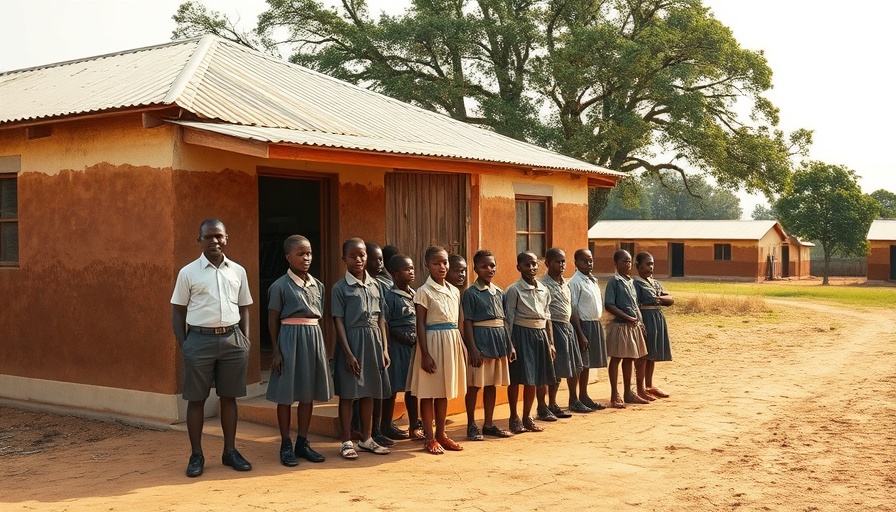
Students in Nigeria school uniforms during Ramadan school closures.

Closure of Schools During Ramadan: A Troubling Development for Nigerian Christians

In an unprecedented move, four states in northern Nigeria—Kano, Katsina, Bauchi, and Kebbi—have decided to close all schools for five weeks during Ramadan. This action not only affects Muslim children but also significantly impacts Christian students and raises alarm regarding religious freedom. The decision has sparked outrage among Christian leaders, who are deeply concerned about the implications for their community and the education system.

The Rights to Education at Risk

John Samuel, a legal expert from Open Doors, emphasizes that the right to education is a fundamental principle that should be honored regardless of a student's religious background. He observes that such closures set a dangerous precedent, potentially leading to further restrictions on rights for religious minorities. Prolonged school interruptions could escalate an already dire educational crisis, exacerbating the plight of millions of out-of-school children in Nigeria, a country already facing an alarming rate of educational deprivation.

What Is at Stake for the Christian Community?

The Christian Association of Nigeria (CAN) has called the closures excessive and discriminatory, arguing that they threaten the principles of equity and national unity. Archbishop Daniel Okoh, the CAN President, has highlighted that while various Muslim-majority nations adapt school schedules to accommodate Ramadan, the approach taken by these northern states risks deepening existing educational inequalities. CAN contends that students in other regions will continue to prepare for national exams while their peers in the affected states remain at home, thus widening the education gap.

Concerns Over National Secularism

Amidst these tensions, there are significant concerns regarding Nigeria’s secular status. The Nigerian constitution maintains that Sharia law should not infringe on the rights of non-Muslims; however, the reality suggests otherwise. Cases of discrimination against Christian students, including previous instances where Christian worship was banned in universities, highlight systemic biases that persist in some regions. Critics worry these closures are part of a broader trend of prioritizing religious preferences over constitutional rights.

Appeals for Government Intervention

Many are calling upon the federal government to intervene and safeguard the rights of all citizens, regardless of their faith or ethnic background. The bishops and advocacy groups seek a reconsideration of the decision, urging discussions that respect the rights and freedoms of all students. Archbishop Lucius Iwejuru Ugorji, representing Nigerian bishops, echoes the sentiment that the secular state should guide all aspects of national life and warns against further entrenchment of religious policies that may alienate minority communities.

The Global Perspective on Religious Observances

Comparisons have been drawn to how other Muslim-majority countries manage educational activities during Ramadan. Nations like Saudi Arabia and the United Arab Emirates have adopted flexible school hours that permit students to participate in both their educational and religious obligations. This raises questions: why can't the northern Nigerian states adopt a similar approach? It seems reasonable to merge respect for faith with educational commitments.

As the situation unfolds, the voices of Nigerian Christians and their allies become essential in advocating for fairness and justice within the country’s educational system. While the call for dialogue continues, we must remain aware of the possible consequences these decisions have on future generations.

Join us in calling for protective measures that uphold the right to education for every child in Nigeria. Let’s advocate for policies that respect both religious diversity and educational opportunities.

International

21 Views

0 Comments

Write A Comment

*
*
Related Posts All Posts
02.22.2026

Is Iran Stalling for Time? Diplomatic Movements Amid US Military Readiness

Update Are Diplomatic Talks Genuine or Just a Delay? The ongoing talks between Iran and the U.S. showcase a complex and fraught relationship, marked by a delicate balance of diplomacy and military readiness. Recently, Iranian leadership hinted at a willingness to compromise by delaying further nuclear enrichment—a gesture many observers interpret as an attempt to buy time rather than a genuine shift towards lasting peace. As the U.S. reviews Iran's proposals, President Trump has signaled that military options remain on the table, increasing tensions and raising questions about the efficacy of negotiations amidst potential strikes. Understanding Iran's Position in a Global Context Iran's historical stance has often been one of resistance against perceived threats, particularly from the West. The recent military buildup by the U.S. in the Middle East can be viewed as both a show of force and a signal to Iran of serious consequences should negotiations fail. In contrast, Iranian Foreign Minister Abbas Araghchi argues that military action has been ineffective in derailing their nuclear ambitions, claiming that past assaults have only fortified their resolve to develop a nuclear program largely on their own terms. The Risks of Military Action: A Double-Edged Sword Escalating military readiness presents significant risks that could lead to severe retaliation. President Trump's contemplation of potential attacks raises concerns that such actions could trigger a regional conflict, drawing in Israel and risking further destabilization. Military analysts warn that while the immediate objective might be to incapacitate Iran's nuclear capabilities, the resulting backlash could lead to renewed attacks from Iranian forces designed to strike back at U.S. interests and allies in the region. Analysing Patterns in U.S.-Iran Diplomacy The interplay between diplomacy and military threats has characterized the U.S.-Iranian relationship for decades. The last few years have demonstrated a pattern where diplomatic overtures from Iran are often met with skepticism from the U.S. Historically, when negotiations are coupled with threats of military action, the approach has often backfired, leading to heightened tensions rather than resolution. The challenge lies in determining whether Iran's latest proposals signify a genuine shift in strategy or are merely a tactical feint in a longstanding contest for power and influence. What’s Next? Predictions for Future Engagements As both nations wrestle with the implications of its actions, the road ahead remains uncertain. If Iran’s counterproposals are deemed satisfactory, we might see a thaw in relations that could lead to a re-engagement on their nuclear program. However, should these conversations collapse, the U.S. may feel compelled to initiate military action to assert its authority, leaving all sides to grapple with the consequences. Both nations stand at a crossroad that could define their futures in the coming weeks. Conclusion: Empowering Informed Faith-Based Actions For those who are mission-minded and culturally engaged, understanding the nuances of these negotiations is crucial. As Christians committed to social justices and human rights, being informed about international relations can empower our advocacy efforts. This creates opportunities for individuals and communities to pray, engage, and respond decisively to ongoing geopolitical challenges and their implications for religious freedom in the region.

02.22.2026

Why is Persecution Increasing in Syria? Understanding the Crisis

Update The Alarming Rise of Persecution in Syria In recent years, Syria has witnessed a profound escalation in the persecution of Christians, surging to become the sixth most dangerous country for Christians globally, according to Open Doors' 2026 World Watch List. This significant jump of 12 places highlights a troubling trend that has escalated since the fall of Bashar al-Assad's dictatorship in December 2024. The resulting power vacuum has led to a surge in extremist violence and intimidation, deeply troubling for the nation’s already vulnerable Christian community. The Human Cost of Religious Persecution As Christians strive to maintain their faith in an increasingly hostile environment, shocking incidents like the tragic bombing of St. Elias Church in Damascus, which killed at least 22 worshippers, underline the rampant violence against them. Reports indicate that at least 27 Christians were killed for their faith in 2025 alone, a stark increase from the zero reported fatalities in the previous year. This rise in violence sparked fear, prompting many Christians to alter their religious practices to avoid attacks during services. Economic Instability and Vulnerability Alongside escalating violence, Syria's economic crisis exacerbates the vulnerability of Christians. With an estimated 300,000 Christians remaining in the country—a drastic decline from previous years—many face dire conditions as they navigate a landscape marked by inflation, food shortages, and unemployment. The desperate state of the economy allows extremist groups to exploit existing tensions, further marginalizing Christians and other religious minorities who are often caught between warring factions. Voices of Hope: Resilience Among Christians Despite the grave circumstances, many Christians in Syria choose to remain. They embody a spirit of resilience, determined to be 'salt and light' in their communities amidst intensifying threats. Their faith remains resolute even in the face of significant danger, urging others to join them in prayer for peace and reconciliation in the region. This unwavering commitment underscores an important message of hope for those who support persecuted communities globally. The Global Call to Action: Support and Advocacy The dramatic increase in persecution necessitates urgent international attention. Organizations like Open Doors emphasize the importance of global support for the Syrian church. They highlight the need for prayer, advocacy, and awareness to address injustices faced by Christians and promote religious freedom. Such collective action not only uplifts those in peril but also fosters greater understanding of the challenges posed by global extremism. Looking Ahead: Future Predictability and Opportunities The current situation reflects a critical junction for Syria, where political instability and rising extremism are intertwined with religious persecution. If current trends continue unchecked, Syria could face further fragmentation, resulting in increased violence against religious minorities. However, there is also potential for positive change. Advocacy efforts can lead to meaningful dialogue across cultures and faiths, promoting the fundamental right to practice one’s religion freely. Conclusion: The Call for Continued Awareness and Support For mission-minded individuals and social justice advocates, the plight of Christians in Syria calls for an unwavering commitment to prayer and active support. It is vital to engage with initiatives aimed at safeguarding religious freedoms and providing tangible assistance to those suffering the repercussions of escalating violence. The faithful perseverance of Christians in Syria serves as a powerful reminder of the resilience of faith under persecution, inspiring us to stand in solidarity with them in their struggles.

02.20.2026

What if Iran Strikes First? Analyzing Potential US Military Action

Update US Readies for Potential Strikes on Iran: What does this mean? The world watches as the United States gears up for what could be a significant military engagement with Iran. Reports indicate that President Trump has amassed a substantial military presence in the Middle East, poised for possible strikes against key Iranian targets. This rapid escalation comes on the heels of aggressive rhetoric from both ends, marking a pivotal moment in U.S.-Iran relations. Historical Context and Background The backdrop of this military readiness can be traced back to Iran's controversial nuclear program, which has long been at the forefront of international concern. The tensions flared further after the June 2025 conflict where U.S. and Israeli forces targeted Iranian nuclear sites, branding their subsequent military actions as necessary for regional security. Trump’s administration has reiterated that Iran must meet stringent conditions concerning its nuclear capabilities or face significant consequences. Current Military Dynamics: What’s at Stake? With the arrival of aircraft carriers like the USS Gerald R. Ford in the Arabian Sea and heightened fighter jet deployments, the U.S. has prepared for extended combat operations. This military positioning, unprecedented since the 2003 Iraq war, places a spotlight on Iran as tensions continue to mount. Iran has responded by fortifying its military installations and warning of severe repercussions against any U.S. aggressions. Future Predictions: Escalation and Regional Stability Should hostilities ignite, analysts speculate on a range of possible retaliatory scenarios from Iran, given that their military assets are now deeply entrenched and protected. The stakes are particularly high as Tehran's strategic counter-measures could include targeting U.S. forces or allies in the region, escalating a conflict that risks spiraling out of control. Historical patterns suggest that these kinds of military confrontations often lead to prolonged engagements, drawing in other regional powers and further destabilizing an already volatile area. Why This Matters: A Christian Perspective For Christians engaged in humanitarian work and interfaith dialogue, understanding the geopolitical landscape is crucial. The potential for military conflict in the Middle East not only poses humanitarian crises but also challenges the delicate fabric of religious coexistence in the region. As tensions rise, advocates for peace must remain diligent in their calls for diplomacy and understanding amidst threats of violence. What You Can Do: Mobilizing for Peace As concerned citizens and believers, we must engage in advocacy for peaceful resolutions and support diplomatic efforts to stabilize the region. This means not only praying for peace but also participating in grassroots initiatives that promote dialogue between different faiths and cultures. In times of potential conflict, our voices can serve as powerful advocates for justice and reconciliation. Conclusion: The Call for Vigilance and Action The future remains uncertain as military options loom on the horizon. While the power dynamics are being set, it is imperative for those who value human dignity and peace to remain vigilant and proactive. Engage in community discussions and support organizations advocating for peace in the Middle East. As the situation develops, remember that your involvement can make a difference. By staying informed and involved, we take an active stand for the values we hold dear.

Terms of Service

Privacy Policy

Core Modal Title

Sorry, no results found

You Might Find These Articles Interesting

T
Please Check Your Email
We Will Be Following Up Shortly
*
*
*