


Most churches are not “bad at social media. ” They’re overloaded, under-resourced, and relying on last-minute posts held together by good intentions and guesswork.
The result is painfully familiar: a burst of activity before a big event, then silence. Volunteers who start keen and quickly burn out. A Facebook page that looks more like a noticeboard than a living church family. Meanwhile, the people you’re trying to reach are scrolling past, never really connecting with your ministry online.
I’ve spent years helping churches build a church social media calendar that actually works in the real world—where volunteers are busy, staff are stretched, and Sunday comes every seven days without fail. The good news is this: you don’t need a full-time social media manager to build consistent engagement. You need a simple, realistic system that your church can sustain.
In this article, I’ll walk through how to design a church social media calendar that supports your ministry, serves your people, and doesn’t exhaust your team.
Why Most Church Social Media Efforts Stall—and How to Break the Cycle
When I sit down with church leaders, I hear the same two obstacles over and over again: “We don’t have enough volunteers,” and “No one has time. ” Those are very real constraints—but they’re not the whole story. Underneath them is a deeper issue: there’s no shared plan that makes social media feel doable, predictable, and purposeful.
Without a clear church social media calendar, every post becomes a mini crisis: Who’s doing it? When will it be done? What should we say? That constant decision-making is exhausting, especially for volunteers who are already carrying other responsibilities. Over time, they start to delay, forget, or quietly step back, because the work feels chaotic and never-ending.
The irony is that a simple calendar actually reduces the burden. A strategic church social media calendar gives your team a rhythm. Everyone knows what kind of content is needed, when it’s needed, and who’s responsible. Instead of scrambling on Saturday night, you’re calmly scheduling posts on Tuesday for the week ahead. That consistency shows up for your congregation too. When people see regular, reliable posts in their feeds, your church stops feeling like background noise and starts feeling like part of their daily life.
And consistency online often translates into growth offline: higher event attendance, better communication, strengthened community, and a clearer sense of your church’s heartbeat in the places people already spend their time—Instagram, Facebook, WhatsApp, and beyond.

Consistency beats inspiration every time. Don’t wait to feel creative—build a schedule, then create within it.
Dan Nichols
The Double Challenge: Volunteers and Time Management in Church Social Media
When it comes to implementing a church social media calendar, two practical challenges almost always surface first: volunteers and time. You might recognise some of these patterns in your own context.
- Undefined roles lead to inconsistent posting and burnout. When everyone is “sort of” responsible for social media, no one truly owns it. One week a youth leader posts, the next week a pastor remembers to share something, then three weeks go by with nothing. That lack of clarity drains energy and quietly burns out the one or two people who feel guilty enough to keep picking up the slack.
- Lack of a set schedule means essential events get missed. If the only question you ask is “What’s happening this week?” you will always be reacting, not planning. Key dates sneak up on you: baptisms, mission Sundays, carol services, youth weekends away. Without a basic, repeatable calendar, it’s easy to either under-communicate important events or flood your channels with last-minute posts that don’t give people time to respond.
- Fragmented content fails to connect with your congregation. Many church feeds are just a string of disjointed announcements: times, locations, reminders, and the occasional verse graphic. There’s no narrative thread, no sense of people, no visual heartbeat. Over time, your audience starts to skim without really seeing you, because they don’t feel invited into a story—just notified about events.
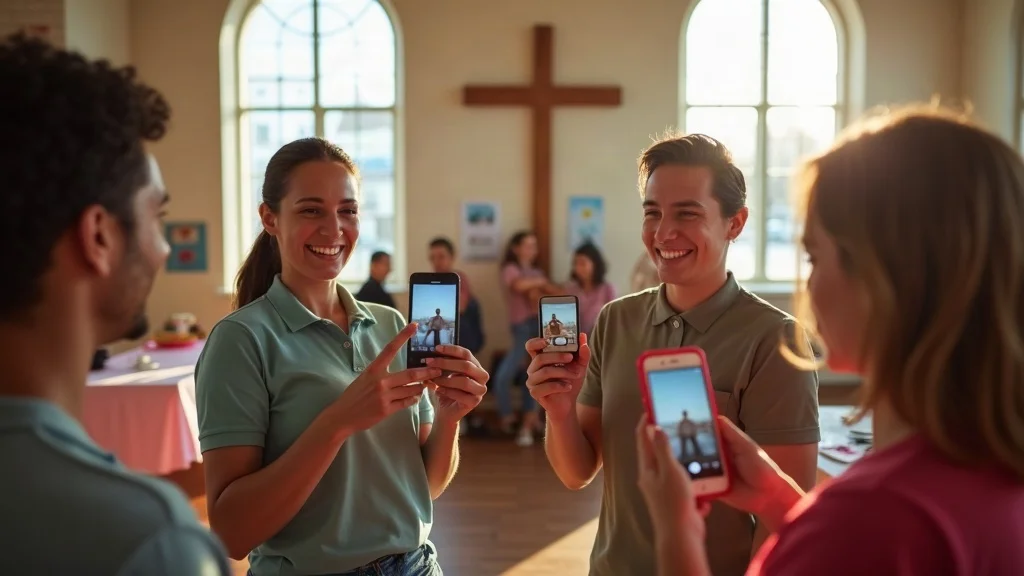
A good church social media calendar tackles all three issues at once. It makes roles explicit, builds a predictable rhythm around real-life church events, and ensures you’re telling a people-centered story, not just posting dates and times.
The Calendar Solution: Building a Reliable Church Social Media System
A church social media calendar is not just a grid of dates; it’s the backbone of your digital communication strategy. It’s how you translate sermons, events, testimonies, and everyday church life into a steady stream of meaningful content that your community can actually engage with.
For the churches I work with, I use a simple three-pillar framework to turn social chaos into a workable system. Whether you have one volunteer or a small team, this framework will help you build a sustainable church social media calendar that matches your reality rather than an idealised version of church life.
Three Pillars of a Sustainable Church Social Media Calendar
- 1. Assign Clear Roles: Designate who does what and when, even if your team is small. Start by separating the tasks: content capture (taking photos and short videos), content creation (writing captions and designing simple graphics), and scheduling (uploading and posting). One person can do all three, but it’s often more sustainable to spread them out. For example, a youth volunteer might handle photos on a Sunday, a staff member might edit and write captions on Monday, and another volunteer might schedule posts for the week. Clarity prevents both duplication and drift.
- 2. Prioritize Consistency: Set realistic posting frequencies that fit your resources. It’s better to plan for three posts a week and hit that target consistently than to aim for daily content and fail after a fortnight. Build your church social media calendar around a minimal but reliable rhythm—such as a Sunday recap, a midweek encouragement, and a Friday “This Sunday” preview. Once that rhythm is second nature, you can add more if capacity grows. The goal is reliability, not volume for its own sake.
- 3. Focus on Visual Engagement: Use event photos, sermons, and people-focused videos to boost connection. Sermon links and event reminders are useful, but they rarely stop the scroll on their own. Photos and videos of real people in your church are far more engaging. A quick clip of worship, a short quote from Sunday’s sermon over a photo, a smiling volunteer team, a baptism moment—these visuals make your church feel human and present. When you build your church social media calendar, plan where each week’s visual content will come from and who will capture it.
People don’t engage deeply with announcements; they engage with people. Show the church family, not just the church schedule.
Dan Nichols

When these three pillars—clear roles, realistic consistency, and visual engagement—are in place, your church social media calendar stops being another burden and becomes a natural extension of your ministry.
As you clarify roles and build a rhythm for your church’s digital presence, it’s also helpful to ground your messaging in the core beliefs that shape your community. For a practical example of how foundational values can inform your communication strategy, explore what we believe as a church and consider how these principles can be woven into your weekly content.
From Idea to Impact: Simple Steps to Start Your Church Social Media Calendar Today
It’s easy to get stuck in theory. The real breakthrough happens when you sit down with a notebook (or a spreadsheet) and actually build your first month. You don’t need special software to start; you just need a structured approach and the courage to keep it simple.
- List major events and regular ministries coming up. Begin with what already exists in your church calendar: Sunday services, small groups, youth, kids’ work, prayer meetings, alpha or outreach courses, special services, and seasonal events like Easter or Christmas. For each, ask, “What would people need to see or know online to feel invited and prepared?” Those answers become your first content ideas.
- Decide who will post—rotate or assign to a dedicated volunteer. Look at your team and choose the most realistic structure. In a very small church, one reliable volunteer or staff member might own the entire church social media calendar, with others feeding them content. In a slightly larger setting, you might assign different days or ministries to different people (for example, youth content to the youth leader, Sunday recap to a communications volunteer). Write these decisions down so everyone knows the plan.
- Batch-create posts using photos, testimonials, and sermon highlights. Instead of creating posts one at a time under pressure, set aside 60–90 minutes every couple of weeks to create a batch. Use recent photos from services, quotes from sermons, short testimonies, Bible verses linked to your teaching series, and simple “behind-the-scenes” moments. Type captions, choose images, and save them in a shared folder ready to schedule. Batching dramatically reduces the feeling of constant urgency.
- Use a free template or spreadsheet to map out the month. A simple grid with dates along one side and platforms across the top can function as your first church social media calendar. Tools like Google Sheets, Notion, or free project management apps work perfectly. Color-code types of content (e.g., blue for Sunday recap, green for events, yellow for stories/testimonies) so you can see at a glance whether your month feels balanced and people-focused rather than announcement-heavy.

The best church social media calendar isn’t the fanciest—it’s the one your team can actually keep using six months from now.
Dan Nichols
If you can complete those four steps even in a rough form, you’ll have moved from reactive posting to proactive planning. From there, you can refine, improve, and adapt as you see what resonates most with your congregation.
Pro Tips for Sustaining Momentum—Even With a Tiny Team
The real test of any church social media calendar isn’t the first month, but month four, five, and six. By then, the novelty has worn off, people get busy, and old habits threaten to creep back in. To keep your momentum—with the same small team—you need to design for sustainability from the start.
- Recycle and repurpose sermon insights for quick posts. Every sermon contains multiple social media posts. Take the main teaching series and break it down into short quotes, key points, reflection questions, and Scripture verses. You might pull one quote and one verse from each Sunday, turning them into midweek encouragement posts. This way, your church social media calendar is directly aligned with your preaching, and you are reinforcing discipleship through the week.
- Empower volunteers with simple guides for photo/video content. Many volunteers hesitate to take photos or video because they’re unsure what’s “good enough.” Create a one-page guide: what to capture (smiles, interactions, worship, serving, kids’ work with safeguarding in mind), how to frame shots, and basic do’s and don’ts. When volunteers know what you’re looking for, they’re more confident, and your content quality improves without needing professional photographers.
- Set recurring reminders to keep the engine running. Treat your church social media calendar like any other ministry rhythm. Add recurring reminders: “Plan next month’s posts,” “Gather photos from last Sunday,” “Review upcoming events.” Use shared calendars, WhatsApp groups, or project tools to nudge your team at the right times. This reduces the mental load and ensures your system doesn’t rely on one person remembering everything.

When you build these habits into your church social media calendar from day one, your tiny team can have an outsized impact. A small, steady stream of thoughtful content will always outperform sporadic bursts of rushed activity.
Key Takeaways: The Secret Ingredient in Every Great Church Social Media Calendar
At its heart, a strong church social media calendar is not about algorithms or fancy tools. It’s about clarity, care, and commitment lived out over time. If you remember nothing else, anchor your approach to these essentials:
- Write every post with clarity and consistency at its core. Your goal is not to impress, but to be understood and remembered. Clear captions, regular rhythms, and simple calls to action will take you much further than occasional flashes of creativity followed by silence.
- Celebrate people, not just events—make your church family visible. Use your church social media calendar to show real lives: volunteers serving, kids learning, youth engaging, leaders praying, and members sharing stories. When people recognise themselves and their friends, your channels become a digital extension of your church foyer, not just a digital noticeboard.
- A small, committed team outperforms a sporadic army. You don’t need ten volunteers; you need two or three who are clear on their roles, supported with a simple system, and given permission to keep things manageable. Over time, that faithfulness builds trust—with your congregation and with those watching from the edges, wondering whether your church might be a place for them.
Ready to Strengthen Your Ministry's Communication?
If you’ve been feeling overwhelmed by social media, you’re not alone—but you’re also not stuck. A realistic, well-planned church social media calendar can transform the way your church communicates, without demanding more than your team can give.
Start small: list your upcoming ministries, choose a simple weekly rhythm, assign clear roles, and commit to showing the faces and stories of your church family. Once that baseline is in place, you can refine, experiment, and grow with confidence.
If you’d like help designing a church social media calendar tailored to your church—aligned with your teaching, events, and visual identity—I’d love to support you through Church Graphic Design. Together, we can build a simple, sustainable system that amplifies your ministry’s reach and keeps your message clear, consistent, and Christ-centered.
As you continue to refine your church’s digital communication, remember that every post is an opportunity to reflect your church’s unique identity and mission. If you’re interested in exploring how your core beliefs can shape not just your content but your entire approach to outreach and engagement, take a deeper look at what we believe as a church. Understanding and articulating these foundational values can help you craft messages that resonate more deeply, foster trust, and invite meaningful connection—both online and in person. Let your social media calendar become a living expression of your church’s heart, guiding your community forward with clarity and purpose.
About the Author I’m Dan Nichols (BSc), Founder & Creative Designer at Church Graphic Design, based in Chesterfield, UK. I’ve spent over 8 years helping UK churches improve their visual communications and digital presence—developing practical strategies for church social media calendars, branding, and print and digital design that serve real congregations, not just ideal scenarios.
Education: BSc Mathematics and Statistics with Management; Qualified Teacher Status (QTS). I’ve worked with churches across the UK to clarify their message, strengthen engagement, and communicate the gospel more effectively in an increasingly digital world.
For more on how I work and how my business interests relate to this content, please see the Business Interest Disclaimer here: Business Interest Disclaimer.





Write A Comment