




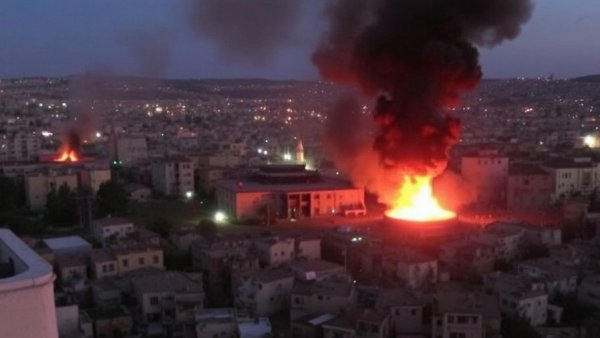
Understanding the Context: What Happened on October 7?
On October 3, 2023, just days before the tragic events of October 7, Major General Aharon Haliva was at the Yarkon base, the IDF's prime signals intelligence installation, where crucial intelligence on Hamas was gathered. The situation was precarious as Israeli intelligence faced significant challenges monitoring activities in Gaza effectively. Reports indicated that intelligence coverage was not only hindered but had experienced fluctuations described as "ups and downs." This led to an inability to accurately assess the emerging threats from Hamas’s operations in the region.
Just a few days later, on October 7, Hamas executed a coordinated attack that took Israel by surprise, starkly highlighting severe intelligence failures within Israeli security agencies. As a result, the scale and sophistication of the assault raised critical questions about the preparedness and response capabilities of Israeli forces.
Hamas' Strategy: A Deceptive Calm
Hamas has long pursued a strategy of deception, crafting an illusion of calm in Gaza to facilitate the execution of its military plans. In the years leading up to the attack, Hamas successfully diverted Israel's attention from Gaza to the West Bank, or Judea and Samaria. This diversion allowed the militant group to build its military capabilities with minimal interference. Intelligence assessments misled Israeli political and security leaders into believing that Hamas was primarily focused on maintaining stability and peace in Gaza, while in reality, they were quietly amplifying their operations and military strength against Israel.
Hamas’ Deceitful Maneuvers and August 2023 Developments
As reported, Hamas launched plans to fortify its positions in Judea and Samaria, aimed at increasing military operations against Israel. This included establishing operational networks to carry out attacks from the West Bank. The significant funding from foreign sources, notably from Qatar, played a pivotal role in bolstering Hamas during this strategic period. By successfully directing attention away from conditions in Gaza, Hamas positioned itself to strike at a moment of its choosing, culminating in the meticulously planned offensive that struck on October 7.
A Lesson on Intelligence Failures
The failure of Israeli intelligence raises profound questions about operational readiness and assessment accuracy. Despite numerous alerts about the rising threat emanating from Hamas and its affiliates, the plans to neutralize key figures such as Yahya Sinwar and Mohammed Deif were delayed. This inaction exposed a catastrophic gap between advanced intelligence assessments and the actual operational capabilities needed to preemptively address the security threats posed by Hamas. The internal discussions and debates among security agency officials reveal a struggle that ultimately hindered immediate and decisive action.
Connecting with the Persecuted Church: Reflections on Prayers for Peace
The context of this situation is crucial for Christians engaged in interfaith dialogue and for those supporting the persecuted church. As violence escalates and uncertainty looms over the region, praying for peace in Jerusalem becomes increasingly vital. The tumultuous atmosphere affects the lives of fellow Christians and hundreds of communities that are impacted by prolonged conflict. Encouraging the faithful to advocate for peace serves not just as a moral duty but also as a pathway to foster hope, understanding, and healing in relationships strained by discord.
Confronting Myths and Creating Action Plans
While some narratives may tend to portray Hamas merely as a political entity, it is essential to recognize their operational strategies and the devastating impacts they have on innocent lives caught in the crossfire of conflict. Advocating for awareness and action through organized prayer, humanitarian assistance, and open dialogues can significantly contribute to addressing these complex issues. Understanding the full scope of the terror directed from Gaza to Judea and Samaria is vital to challenging the narratives that seek to undermine the plight of the persecuted.
It is essential for communities of faith to embrace the call to be informed and proactive, collaborating with institutions that provide aid and foster peaceful dialogue. By better understanding the dynamics of the situation, we can develop more effective plans of action that both support those in need and seek justice.
In conclusion, the events surrounding October 7 serve as a stark reminder of the complexities and interrelations between faith, politics, and security in this deeply tumultuous region. As Christians, we are called to reflect on the implications of these narratives on our mission and take action through prayer, education, and advocacy for peace. Only through such commitment can we hope to contribute to a resolution that prioritizes human dignity and the sanctity of life for all caught in this cycle of conflict.



Write A Comment