Add Row
Add Element
cropper
update

Biblical Living Unlocked

Logo - Biblical living unlocked
update
Add Element
  • Home
  • Categories
    • Biblical Parenting
    • Parenting Tips
    • Family Fellowship
    • Bible Teaching
    • Apologetics
    • Community Stories
    • Youth Focus
    • International
    • Walton Evangelical Church
    • Salt Church Mar Menor
    • Salt Church Los Montesinos
    • John Piper
    • News & Offers
Add Element
  • Ken on Facebook
    update
  • update
  • update
  • update
  • update
  • update
  • update
March 21.2025
2 Minutes Read

How Open Doors Training Empowered Women to Transform Their Church

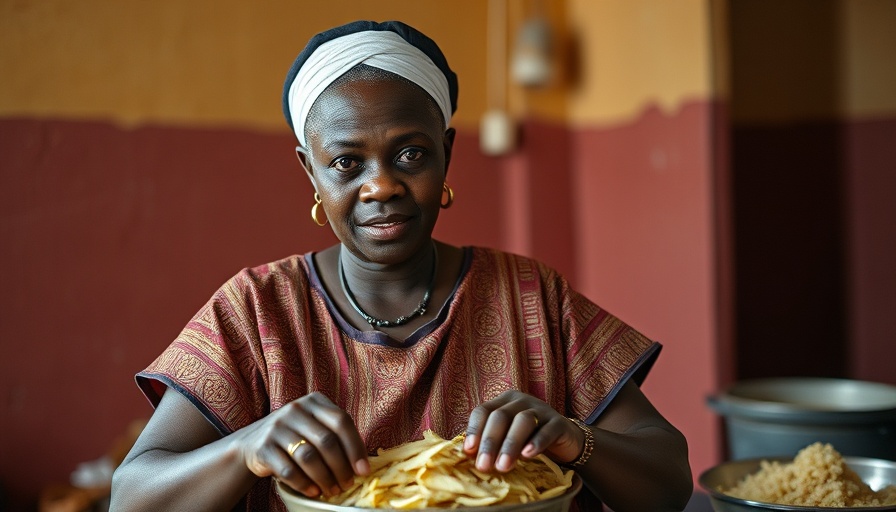
Cameroonian woman in Open Doors training cooking indoors.

Empowering Women Through Faith and Training

In the heart of Garoua, Cameroon, a group of seven women, led by Auristine, has taken a bold step to transform their lives and their church. Attend an Open Doors self-help group training, these women were and are creating a ripple effect of empowerment and resilience in their community. Following their training, they established Femmes Capable, a supportive group dedicated to educating women about standing firm in their faith during times of adversity.

Understanding Persecution's Impact on Women

In regions plagued by religious tension and persecution, the vulnerability of women often goes unnoticed. Auristine notes that many in her community, particularly among the congregation of her husband’s church, are unaware of the harsh realities faced by Christians, especially women who convert from Islam. Recognizing this gap in awareness, the training they received focused not only on practical skills but also on the spiritual fortitude needed to face challenges head-on.

The Birth of Femmes Capable

With newfound skills and confidence, Auristine and the other six women launched Femmes Capable, a small group empowering women through both education and practical business skills. Auristine reflects on the transformation: “At first, I had a hard time getting the women in my congregation together. Now, we teach women how to evangelize, conduct Bible studies, and prepare for times of adversity.” This initiative has cascaded into other communities, reaching all twelve church locations in their region.

Financial Independence Through Collaboration

The benefits of their collective endeavors go beyond spiritual support; they extend into practical financial solutions. Understanding local economic pressures, these women learned to craft various products—such as neem oil and soap—from locally sourced ingredients. Auristine explains, “Neem grains cost us nothing. We pay women to collect the seeds, turning them into a profitable resource.” Through cooperation, these women have achieved financial autonomy, significantly improving their households and contributing to the broader church community.

A Testament to Faith and Community

Today, each woman in Auristine’s group stands as a testament to resilience and empowerment. They not only support their families but actively participate in their church's growth. The drastic change in their community echoes a profound truth: when women are educated and supported, they uplift entire communities. As these empowered women sow seeds of faith and service, their impact reverberates beyond their immediate surroundings, shining a light of hope in a region marked by adversity.

International

16 Views

0 Comments

Write A Comment

*
*
Related Posts All Posts
11.30.2025

Israel's Worries About U.S. Driven Timeline in Gaza Amid Humanitarian Crisis

Update Israel's Concerns Over U.S. Influence in the Gaza Conflict As tensions heighten in Gaza, Israel fears that U.S. pressure will dictate the terms of how to handle the ongoing conflict, particularly regarding Hamas. With only two hostages remaining in the hands of the terrorist organization, Israel's defense establishment is anxious that Washington’s eagerness may undermine Israel’s ability to dismantle Hamas effectively. The Trump administration's approach to a multi-phase plan aims to bring peace, but there are significant anxieties about foreign influence overshadowing regional security interests. The Complex Web of U.S. Policy Toward Palestine Understanding the historical context of U.S. policy in the region sheds light on current dynamics. A timeline of the U.S. approach shows shifts from outright support for Israel to attempts at facilitating discussions between conflicting parties, particularly focusing on the Palestine Liberation Organization (PLO). These developments underscore decades of diplomatic engagements that have shaped America's role as a mediator in this enduring conflict. Notably, the American political landscape’s reaction to Hamas and its classification as a terrorist organization has become a sticking point that complicates peace efforts. The Humanitarian Crisis and Its Implications The situation in Gaza has reached critical levels, with reports indicating thousands of casualties following military operations. As Israel prepares for the second phase of negotiations to recover hostages, the humanitarian impact cannot be overlooked. Civilians face dire conditions, marked by shortages of food, medical supplies, and basic necessities. This reality heightens the urgency for international advocacy, especially from humanitarian-focused Christians who are observing the fundamental challenges faced by those in Gaza. Parallel Events Impacting the Conflict Historically, similar patterns of violence and negotiations have been observed. For instance, the rise of militant groups often followed humanitarian crises, which in turn fueled cycles of violence. The latest ceasefire agreement reflects an understanding of the urgent need for peace, echoing tender moments in past negotiations where both sides sought solace amidst conflict-driven despair. Each new agreement or truce introduces opportunities for dialogue, yet Israel’s fears remain that these initiatives could be undermined by external political influences or internal divides. Future Predictions: A Delicate Balance The negotiation landscape remains precariously poised. If America continues to push for timelines that are not in alignment with Israel's security concerns, there is a substantial risk of reigniting violent encounters in Gaza. Future negotiations are crucial not only to reclaim hostages but to foster a legitimate path toward lasting peace. Observers must remain vigilant as historical grievances and contemporary political maneuvers influence this ongoing situation. The potential for a renewed conflict looms as interfaith dialogues and strategic advocacy efforts seek to bridge divides between communities and cultures. Call to Action: Engage in Advocacy and Awareness As concerned individuals committed to social justice and humanitarian efforts, it's vital that we stay informed and engaged. Supporting initiatives that promote interfaith dialogue, humanitarian aid for Gaza, and advocacy for peaceful resolutions can make a meaningful impact. Let’s come together to foster understanding and cooperation across cultures, aligning our voices for the pressed needs of those caught in cycles of violence.

11.28.2025

Rising Antisemitism: Sylvan Adams Urges Stronger Israel Advocacy Amidst Propaganda Challenges

Update Understanding Today’s Antisemitism and Its Historical ContextIn a striking assertion, Sylvan Adams, the president of the World Jewish Congress Israel region, recently emphasized the urgent need for Israel to enhance its public diplomacy. He claims that the current wave of organized antisemitism is nearing levels not seen since the 1930s. This disturbing phenomenon often manifests through propaganda and misinformation that undermines the Jewish narrative—influencing perceptions globally. With the death toll rising from ongoing conflicts and the growing visibility of antisemitism across social media platforms, scholars and community leaders have noted that this situation is rooted in a long history of prejudice against Jews.The Role of Global Leaders in Addressing AntisemitismAdams has criticized figures like Canadian Prime Minister Justin Trudeau and former U.S. President Barack Obama, suggesting that their ambiguous stances on the Israel-Palestinian conflict contribute to the confusion and hostility faced by the Jewish people. He refers to these leaders as playing “both sides” in a fight he describes as a fundamental conflict between good and evil. This duality hampers effective diplomacy and solidifies antisemitic sentiments, which stem from both historical bias and modern political narratives.Community Response and the Need for ActionFor communities concerned about this rising tide of antisemitism, understanding the dynamics at play is essential. Adams argues that the Jewish community must adapt its strategies to counteract the misinformation spread by groups who exploit these issues for their agendas. Young people, in particular, are increasingly influenced by the narratives they encounter online, necessitating a re-evaluation of how the pro-Israel message is conveyed in educational and social contexts.Unity in the Jewish Community Amidst External ThreatsDespite the challenges posed by rising antisemitism, there are signs of strengthened unity within the Jewish community, as described by Adams. Increasing interest in Jewish education signifies a shift towards deeper cultural connections and an understanding of one’s heritage. As more individuals engage with their roots, the Jewish people are not just seeking to preserve their identity but are also advocating for a narrative of peace and cooperation within the context of ongoing conflicts.Future Predictions: Moving Forward Against AntisemitismAs discussions about antisemitism intensify, there is a growing consensus that proactive engagement is vital. Adams suggests that Israel can turn the tide against this propaganda war by presenting a compelling, authentic narrative that highlights the country’s moral values and its humanitarian efforts, such as medical initiatives aimed at helping children from conflict zones. By amplifying these stories, advocates may counteract the prevailing narrative that often paints Israel negatively.Conclusion: The Call for Broad-Based EngagementAs communities navigate the complexities of antisemitism, the insights from leaders like Sylvan Adams remind us of the importance of unity, education, and public diplomacy. The fight against this form of hatred is not just the responsibility of Israel or the Jewish community but requires broad-based engagement from allies across the globe. Each of us is called to stand firm against hatred and misrepresentation.

11.27.2025

Iran's Strategic Arms Flow: Boosting Houthi Military Capabilities

Update Understanding Iran's Role in Houthi MilitancyThe ongoing conflict in Yemen has drawn international scrutiny, particularly regarding the role of Iran in bolstering the military capabilities of the Houthi rebels. Recent reports indicate that the Houthis have significantly enhanced their military equipment, particularly in the wake of their confrontations with Israel. This advancement is attributed to an intricate network of smuggling routes that facilitate the flow of advanced weaponry from Iran to Yemen. By capitalizing on global air routes, Iran has managed to provide the Houthis with the arms necessary to challenge both regional adversaries and global interests.The Houthi’s Advanced Military SetupAccording to sources, the Houthis have created a robust maritime, land, and air smuggling network. These channels have allowed them to acquire sophisticated military equipment, which was clearly exposed during the recent war in Gaza and their direct confrontations with Israeli forces. This increased military capability not only threatens the stability of the Gulf region but also poses a significant risk to neighboring countries, which are often at the mercy of escalating conflict.Historical Context: Iran and the HouthisTo understand the current situation, one must look at the historical relationship between Iran and the Houthi rebels. Iran has long been accused of providing support to various militias in the Middle East as a means to extend its influence. The Houthis, who belong to the Zaidi sect of Shiite Islam, have found common ground with Iran in their shared opposition to Saudi-led efforts in Yemen. This alliance has allowed Iran to use the Houthis as a proxy to assert its military presence in the region, complicating an already volatile landscape.The Importance of Global AwarenessFor Christians and social justice advocates worldwide, the implications of these developments in Yemen are profound. As followers of Christ, there is a moral imperative to recognize the plight of individuals affected by these conflicts. It is essential for mission-minded individuals to engage in humanitarian efforts aimed at providing assistance to war-torn areas while advocating for peaceful resolutions. The increasing militarization of groups like the Houthis undermines democratic processes and human rights, which goes against the core principles of many faith-based organizations.Future Predictions: Increased Tensions AheadThe trajectory of the conflict suggests that tensions will escalate as the Houthis continue to receive support from Iran. The recent enhancements in their military capabilities signal a potential uptick in confrontations not just with Saudi Arabia, but also with Israel, further complicating geopolitical dynamics in the region. As these countries brace themselves for possible conflicts, many are left wondering what the future holds for the citizens caught in the crossfire.Actionable Insights for Faith and AdvocacyAs concerned citizens and believers, it is crucial to engage with this issue meaningfully. Consider supporting organizations focused on providing aid to those affected by the Yemeni conflict, advocating for policies that promote peace and justice in the region, and fostering dialogues that bridge gaps between communities. These actions can create a ripple effect, encouraging systemic change rooted in compassion and understanding.Conclusion: The Call for CompassionThe intricate tapestry of international relations in the Middle East requires thoughtful reflection and action. For Christians and socially aware individuals, understanding these issues fosters empathy towards those suffering in conflict zones. It is our collective responsibility to champion peace and support those striving for justice. Through awareness and advocacy, we can strive to bring about positive change amid the turmoil.

Terms of Service

Privacy Policy

Core Modal Title

Sorry, no results found

You Might Find These Articles Interesting

T
Please Check Your Email
We Will Be Following Up Shortly
*
*
*