Add Row
Add Element
cropper
update

Biblical Living Unlocked

Logo - Biblical living unlocked
update
Add Element
  • Home
  • Categories
    • Biblical Parenting
    • Parenting Tips
    • Family Fellowship
    • Bible Teaching
    • Apologetics
    • Community Stories
    • Youth Focus
    • International
    • Walton Evangelical Church
    • Salt Church Mar Menor
    • Salt Church Los Montesinos
    • John Piper
    • News & Offers
Add Element
  • Ken on Facebook
    update
  • update
  • update
  • update
  • update
  • update
  • update
April 15.2025
2 Minutes Read

Leaked Security Information: Unpacking the Shin Bet Investigation

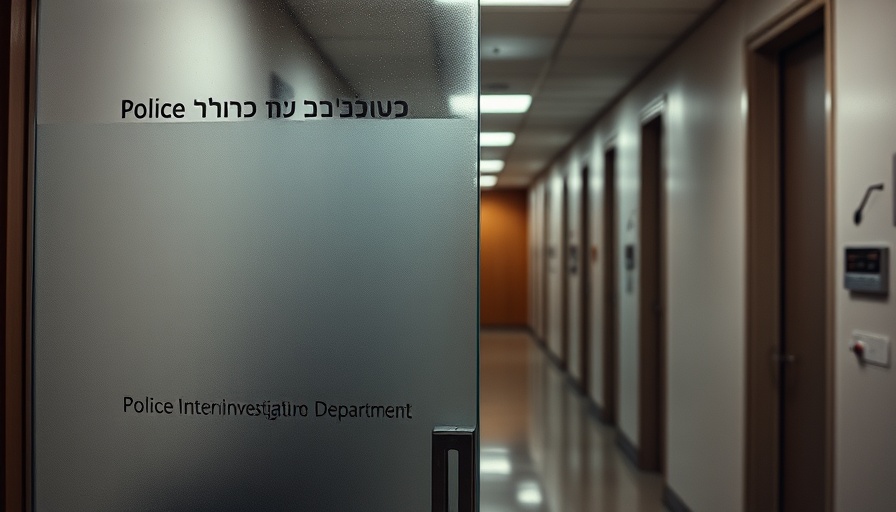
Shin Bet Security Investigation office entrance with text on frosted glass door.

Intriguing Developments: Shin Bet and the Classifed Information Breach

A new investigation has emerged that sends ripples throughout Israel’s security community. The Shin Bet, Israel's internal security service, alongside police forces, is currently probing a serious case involving the suspected leak of classified information from Israel’s critical security agencies. The details remain shrouded under a comprehensive gag order imposed by the State Attorney's Office, raising concerns about transparency during such a significant inquiry.

The Context: Understanding Israel's Security Landscape

The Israeli security establishment, encompassing organizations like Shin Bet and the military's intelligence units, works tirelessly to safeguard the country's national interests. Leaks of sensitive information could jeopardize ongoing operations and harm diplomatic relations. With the higher stakes surrounding security and intelligence, any internal breaches demand immediate attention.

Why This Matters: The Implications of Security Leaks

Leakers within security agencies pose substantial risks. They not only compromise operations but can also place lives in danger. As Christians who advocate for justice and human rights, it’s essential to understand how national security efforts intersect with the treatment of vulnerable populations, particularly in conflict zones. Such breaches could derail peace efforts, maintaining a cycle of violence rather than facilitating the dialogue necessary for sustainable solutions.

A Broader Perspective: Interfaith and Ethical Considerations

This incident doesn't only concern Israel's stability; it calls into question the delicate balance among diverse religious communities in the region. As mission-minded individuals, it's critical to remain informed about how government actions impact local Christians and other faiths. When security measures lead to ethical dilemmas or violations of human rights, advocates must ensure that the voices of affected communities are heard.

Reflections on Governance and Human Rights Advocacy

As the case unfolds, it's a moment for reflection on how to uphold justice amid security concerns. Reporting on such matters not only informs advocates but can mobilize communities to take action. When behind-the-scenes investigations surface in the public consciousness, discussions about governance must also consider the implications for civil rights and the well-being of all citizens.

Actionable Insights for the Community

Encouraging prayer and support for transparency in governance can empower local and global communities to engage with urgent issues. Monitoring developments regarding this investigation can lead to informed discussions about the pressing need for justice and peace in Israel and the surrounding regions. Advocating for policies that uphold human dignity amid security concerns is a vital component of Christian engagement in geopolitics.

As Christians dedicated to social justice and human rights, understanding the implications of national security issues can help position us to support the voices of the marginalized in our advocacy efforts.

International

17 Views

0 Comments

Write A Comment

*
*
Related Posts All Posts
12.19.2025

The Return of Hamas Hostages: A Wake-Up Call for Israel's Future

Update The Complex Reality of Hostage Negotiations The recent return of hostages by Hamas has ignited significant concerns among Israeli officials and the wider community. Initially, many believed that Hamas would struggle to recover and return even one hostage, making the successful return of multiple captives both alarming and revealing. The operational capability demonstrated by Hamas in this regard poses critical questions not only about the immediate safety of Israeli citizens but also about the broader implications for regional stability. Understanding the Stakes: A Deep Dive One of the pressing issues raised by the aftermath of the hostage return is the potential for Hamas to rebuild its operational strengths amidst ongoing ceasefire negotiations. The challenges of a ceasefire in the Gaza Strip are compounded by the realities of releasing individuals convicted of heinous crimes, a politically charged move that many claim comes with severe risks. As highlighted in discussions by experts in the field, these complexities necessitate robust contingency planning from Israeli leadership. The Emotional and Ethical Dimensions Central to the narratives surrounding the hostage return is the ethical imperative of bringing home Israeli citizens abandoned in previous conflicts. This moral obligation underpins Israel's considerations as it navigates the tumultuous waters of the ceasefire agreement. As we consider the hostages' plight, the emotional aftermath is felt acutely within communities that strive for solidarity and hope even in the darkest hours. Jewish principles of mutual responsibility resonate deeply here: "all Israel are responsible for one another" must be a guiding light as negotiations unfold. Concern for Future Implications Experts warn that allowing Hamas to retain control presents a long-term risk not just to Israel but also to regional stability. The potential resurgence of Hamas after a ceasefire could create fertile ground for renewed violence, as any semblance of quiet might be mistaken for strength. According to political analysts, the strategic errors made must not repeat themselves. Hostage negotiations should demand that Israel prepare for the likelihood that Hamas remains at the helm in Gaza, drawing parallels to previous military operations in Lebanon which faced significant challenges after initial success. Looking Ahead: What Are the Options? As Israeli leaders now grapple with the 'day after' the ceasefire agreement, they face several daunting alternatives concerning Gaza’s future. Reoccupation, military rule, chaos, or finding a civilian alternative amidst Hamas’s rule are all options on the table. Each carries potential repercussions—politically, socially, and economically. Experts suggest that without a comprehensive and forward-thinking strategy, Israel may find itself cycling through the same challenges ad infinitum. The Importance of a Strategic Exit Plan In resolving this multi-layered issue, it is crucial for Israel to craft a viable exit strategy that will not only sidestep past mistakes but also establish a framework for future governance in Gaza. While ensuring security and stabilizing the region will be necessary, responsibilities must also respect humanitarian needs and international law. Indeed, a carefully thought-out plan could offer a path forward not just for Israel, but perhaps also a route to long-term peace for the Palestinian territories under a new governance model free of Hamas control. Community Engagement and Next Steps The ongoing situation presents a critical moment for globally engaged Christians and humanitarian advocates alike to reflect on the dynamics at play in Gaza. Understanding the ramifications of the hostage situation and engaging in informed discussions about the broader Middle East challenges can form a vital part of advocacy efforts. Equipping communities with knowledge about these complexities will help advocate for peace and justice moving forward. As we look to navigate through these difficult times, support for humanitarian efforts and engagement in interfaith dialogue can play a crucial role in restoration and reconciliation. We must aim to prioritize our shared humanity while addressing the underlying grievances that fuel conflict.

12.18.2025

How the Israeli Navy's Operation Thwarted Hezbollah's September 11-Style Scheme

Update A Heroic Prevention of a Major ThreatIn a dramatic fish-out-of-water operation, Shayetet 13, Israel's elite naval commando unit, successfully abducted a high-ranking Hezbollah operative, Imad Amhaz, who was so closely tied to a secret naval project that it threatened Israel's national security. Shadowing him for three years, Israeli intelligence gathered vital information that led to the apprehension of a man whose clandestine ventures were akin to planning a maritime version of a 'September 11' style attack.The Calm Before the StormOn a seemingly ordinary night in November 2024, amidst escalating tensions between Israel and Hezbollah, Shayetet 13 commandos quietly executed a raid in Batroun, Lebanon, capturing Amhaz without a single shot being fired. This extraordinary raid was not only a show of tactical wrestling but reflected a larger narrative of intelligence warfare and psychological strategizing against the backdrop of regional conflict.The Secrets of Operation 'Maritime File'Amhaz was not just any operative; he was the centerpiece of Hezbollah's "Secret Naval File," a project meant to utilize civilian vessels for terrorist acts against Israel. The ambition behind this initiative was chillingly similar to the infamous 2001 attacks. According to military intelligence, Nasrallah and his top commanders envisioned using commercial ships masked as standard maritime activity to launch attacks, thus flipping the script on conventional military engagement.Intelligence is KeyWhat led Israeli forces to uncover this looming threat was an intensive intelligence operation spearheaded by a young female analyst from Naval Intelligence, identified only as A. Upon deepening her focus on Amhaz, she gathered details that pointed toward numerous secret meetings with Hezbollah's senior figures and revealed that he was being groomed to lead this frightening maritime project against Israel.A Tightening NetAs the operation unfolded, Amhaz’s activities became increasingly suspicious. While he donned the façade of a maritime civilian, he undertook voyages and trainings with Hezbollah’s top commanders, solidifying his role in a potentially catastrophic future for Israel. His cover as an innocent civilian would shatter the moment he stepped fully into his military responsibilities.The Operation's Outcome and ImpactPost-abduction, interrogations revealed crucial insights into the ongoing efforts by Hezbollah to scale its operations both inside and outside Lebanon. Intelligence operatives confirmed that targeting Amhaz was essential to defeating a significant element of a high-stakes game, highlighting the intricate web of terrorism financing and operations that characterize modern warfare.In Conclusion: Lessons LearnedFor believers in the value of social justice and humanitarian efforts, it’s crucial to recognize the intersection of faith, warfare, and geopolitical dynamics. This operation exemplifies how strategic intelligence efforts can safeguard not only national interests but also the lives of countless innocent individuals who would otherwise be caught in the crossfire. The implications extend far beyond the conflict itself, as it challenges us all to consider how we engage with the realities of modern-day warfare, preserving innocence amidst chaos.Call to ActionAs we navigate these complex geopolitical waters, it's essential to stay informed and engaged. Consider advocating for peace-and-humanitarian-driven policies that focus on reducing violence, promoting interfaith dialogue, and supporting those affected by conflicts.

12.17.2025

Eritrea's Christians Amid Prison Releases: Hope and Healing Ahead

Update A Glimmer of Hope: Recent Prison Releases in Eritrea Praise God! Recent reports indicate that several Christians have been released from the notorious prisons of Eritrea, a country known for its extreme persecution of believers. This news is especially significant for those who have followed the plight of Christians in the region, where the government limits religious freedoms and only three denominations are officially recognized: Catholic, Lutheran, and Orthodox. With an estimated 1,000 Christians imprisoned without charges, every release is a hopeful sign that the tide may be turning for those silenced by oppression. The Struggle for Religious Freedom Eritrea is often referred to as the ‘North Korea’ of Africa due to its brutal crackdown on dissent and religious liberties. As the country ranks sixth on the World Watch List for Christian persecution, many believers face daily threats simply for their faith. Despite the recent releases, notable church leaders like Rev. Dr. Tekleab Menghisteab and Rev. Million Gebreselassie remain imprisoned after two decades, highlighting the ongoing struggle for many. The Physical and Emotional Toll of Imprisonment Those released often emerge bearing the scars of their experiences. Living conditions in Eritrean prisons are abysmal, with inmates subjected to overcrowding, inadequate food, and a lack of medical care. Reports indicate that prolonged detention can lead to severe health issues such as high blood pressure and diabetes, causing further complications upon release. As Tiffany Barrens from Open Doors stated, “They have had no legal representation, and their families have not been permitted to visit them,” which paints a stark picture of the challenges faced by these individuals. What Lies Ahead for Released Prisoners The journey toward reintegration can be difficult for those who have suffered prolonged absence from society and family. Jo Newhouse from Open Doors expresses both gratitude and apprehension for those liberated: “While immensely grateful, we remain apprehensive about the physical, emotional and spiritual condition of those who have been released.” Support and prayer for these former prisoners are crucial as they navigate the hurdles of emotional healing and social acceptance. A Call for Action: Advocacy and Support The release of these cherished believers is a breath of fresh air but calls to action must not fade. Advocacy efforts should continue to focus not only on the free individuals but also on the dozens still held in dreadful conditions. Engaging with local representatives and sharing stories can rally necessary support and awareness for the plight of Christians in Eritrea. As missionary groups prepare for critical events, including the upcoming World Watch List parliamentary launch, participation is key. The Importance of Prayer For those concerned about persecution in Eritrea, prayer remains a powerful conduit. Indeed, many recognize this recent release as an answer to prayer. Believers are encouraged to continue praying for the peace and healing of those released, their families, and the safe return of leaders still imprisoned. It’s through the collective voice of the church and community that hope can be breathed into the dark corners of oppression. As we absorb this good news, let us not forget the urgency of our prayers and actions. More than ever, the call is to stand with our persecuted brothers and sisters, advocating for justice and mercy in Eritrea. **Invite your MP:** In support of the journey towards freedom, invite your local Member of Parliament to learn more about the extreme persecution facing Christians in Eritrea and how they can help. It takes just two minutes to make a difference!

Terms of Service

Privacy Policy

Core Modal Title

Sorry, no results found

You Might Find These Articles Interesting

T
Please Check Your Email
We Will Be Following Up Shortly
*
*
*