Add Row
Add Element
cropper
update

Biblical Living Unlocked

Logo - Biblical living unlocked
update
Add Element
  • Home
  • Categories
    • Biblical Parenting
    • Parenting Tips
    • Family Fellowship
    • Bible Teaching
    • Apologetics
    • Community Stories
    • Youth Focus
    • International
    • Walton Evangelical Church
    • Salt Church Mar Menor
    • Salt Church Los Montesinos
    • John Piper
    • News & Offers
Add Element
  • Ken on Facebook
    update
  • update
  • update
  • update
  • update
  • update
  • update
February 27.2026
1 Minute Read

What Most Don’t Know About the Street Preacher’s Charter

Did you know the Street Preacher’s Charter protects vital freedoms often overlooked? Understanding its nuances can empower advocates and communities alike, ensuring voices are heard respectfully and legally in public spaces - unlocking rights many never knew they had. For many years, street preachers have been bold voices in city centres, bringing a message of hope, change, and discussion. Yet, few truly understand the rights and responsibilities granted by The Street Preacher’s Charter - a powerful resource for evangelists, community leaders, police officers, and anyone interested in free expression. In this article, we unpack the origins, scope, real-life impact, and best practices tied to this unique UK tradition, helping preachers and police better understand how to protect and respect public ministry within the law.

Unveiling the Street Preacher’s Charter: Why It Matters in the UK

The street preacher’s charter is more than just a term - it represents a fundamental recognition in UK society that public evangelism, when done responsibly, is a protected freedom. For responsible Christian street preachers, supporting organisations, and even local police officers, the charter sets clear boundaries that allow for public ministry, while also encouraging good practice in busy, diverse communities. The charter aims to help preachers and police officers align their actions with the law, unfolding key principles illustrated in real-world scenarios.

But why does it matter now? Recent years have seen heated debates on protest, free speech, and community harmony. The charter, published by the Christian Institute and even by senior figures such as Lord Macdonald of River Glaven, provides an overview of relevant laws directly affecting those who preach, share, or listen in the UK’s town squares. Extracts from the law and landmark cases remind us that upholding the law does not mean silencing spiritual voices - instead, it means protecting respectful public discussion for all. Knowing your rights and responsibilities isn’t just helpful: it’s essential.

Street preacher’s charter, UK street preacher engaging public near historic British architecture in vibrant city square, photorealistic, confident and welcoming

What You’ll Learn from Understanding the Street Preacher’s Charter

  • The origins and historical context of the street preacher’s charter

  • Key rights and responsibilities for UK street preachers

  • Best practices for engaging communities and authorities

  • Legal considerations and landmark cases

  • Frequently misunderstood aspects of the street preacher’s charter

The Street Preacher’s Charter: A Brief History and Its Role for UK Street Preachers

"The street preacher’s charter protects not only the right to speak, but the right to be heard respectfully in public, ensuring every voice matters."

The history of the street preacher’s charter stretches back to times when public discourse was the heart of local democracy. From open-air preaching in the days of Wesley and Whitfield to modern gatherings in bustling city centres, public ministry has long had a place in British life. However, as urban communities grew and legal frameworks evolved, practical questions emerged: how far does free speech extend? Which laws apply to street preachers?

Many years ago, Lord Macdonald of River Glaven - then Director of Public Prosecutions -formally recognised the value of street preaching and framed guidance for police and street ministry. The Christian Institute and similar groups promoted resources that offer an overview of relevant laws and real-life applications. These resources aim to help preachers and police officers by illustrating key principles, encouraging good practice, and assisting responsible Christian street preachers in staying compliant while sharing their message. Today, the charter is a living document that continues to evolve as society and the law adapt to new challenges.

Historic UK street preacher’s charter: British protest assembly in classic city street, photorealistic, diverse group with umbrellas in light rain

Essential Rights and Responsibilities Under the Street Preacher’s Charter

The street preacher’s charter strikes a balance between freedom of speech and respect for public order. It acknowledges that, while UK law firmly supports the right to communicate religious beliefs in public spaces, this freedom operates within clear boundaries. The core idea is that no right exists in a vacuum - responsibility walks hand-in-hand with liberty for both preachers and authorities.

For preachers, this means upholding the law, fostering community peace, and navigating scenarios in which personal conviction meets public scrutiny. Police officers, too, are tasked with supporting lawful expression, stepping in only when actions breach public safety or cross into disorderly conduct. Good practice is not just encouraged; it is essential for lasting positive relationships with local communities and authorities. The result is an environment where every street preacher knows where they stand, and every citizen’s rights are considered.

Rights and Responsibilities of Street Preachers: Balancing Freedom and Accountability

  • Freedom of speech within legal boundaries

  • Obligation to respect public order and community peace

  • Guidance for responding to authorities and public feedback

  • Practical scenarios: navigating real-world situations

The street preacher’s charter sets out explicit rights and responsibilities, offering clarity to both preachers and police officers on what is and isn’t permitted when ministering in public. Responsible Christian street preachers are called to exercise free speech while remaining mindful of their obligations to avoid provoking hostility or breaking local laws on noise, obstruction, or harassment. In turn, police officers are directed to act consistently and proportionately - upholding the law, supporting peaceful assembly, and stepping in only when absolutely necessary.

Real-world situations offer many lessons: when neighbours complain about noise, when a passer-by objects to content, or when gatherings swell suddenly during major events. The principles in the charter, refined by advice from figures like Lord Macdonald, aim to prevent misunderstandings, reduce unnecessary conflict, and encourage good practice every step of the way. These rights and responsibilities are the backbone supporting both spiritual boldness and community harmony.
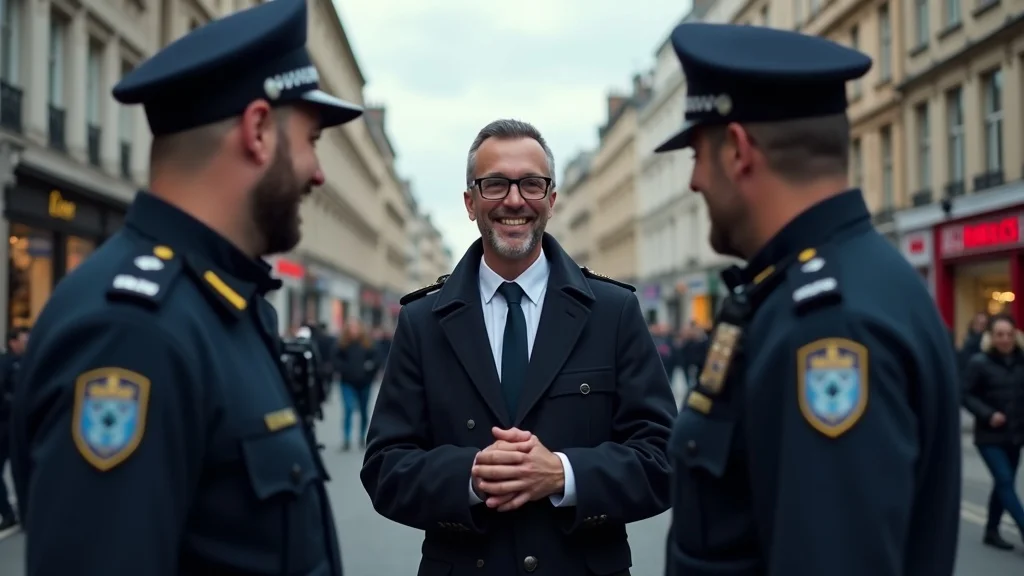
Respectful dialogue: UK street preacher interacting with police officers, cooperative body language, photorealistic, modern high street

Good Practice: How the Street Preacher’s Charter Shapes Effective Ministry

Practising good ministry in public is much more than handing out leaflets or raising one’s voice - it’s about positive engagement with diverse communities. The street preacher’s charter provides a clear template for good practice, from preparing for public outreach to resolving misunderstandings with local authorities. It helps preachers avoid pitfalls that have, over many years, been the source of controversy or even legal challenge for Christian workers.

Leading examples from across the UK show that when preachers follow the charter’s guidance, communities become more open, and authorities act with fairness. The Christian Institute and other resources highlight steps like learning the relevant laws, collaborating with local councils, and planning public events with sensitivity. By following proven steps, UK street preachers are empowered to deliver their message confidently, respectfully, and legally - nurturing goodwill that benefits everyone.

For those interested in how faith communities can further strengthen their outreach and foster unity, exploring the impact of live-streamed services offers valuable insights. Discover how initiatives like Walton Church UK’s live streaming are helping to build community and extend ministry beyond traditional public spaces.

Best Practices for UK Street Preachers and Community Outreach Workers

  • Engaging respectfully with diverse audiences

  • Avoiding common legal and ethical pitfalls

  • Collaborating with local authorities effectively

True impact comes from engagement, not just proclamation. The best preachers listen as much as they speak, welcoming questions and responding with patience. They take care to avoid routes and times that disrupt local business or residential peace, leaning on the charter’s emphasis on good practice. Collaboration - with the police, local authorities, and even critics - proves far more effective than confrontation.

Training, coaching, and sharing experiences among street preachers and community workers lead to durable progress. When issues arise, following up with mediation or dialogue, as suggested by the charter, helps safeguard the right to minister while preserving trust. The result is a model for responsible Christian street preachers - one that inspires others to respect both the message and the people to whom it’s preached.

UK street preacher’s charter best practices: Friendly preacher with community, outreach in vibrant green public park, high realism

Case Studies: The Street Preacher’s Charter in Action

Learning from real-life legal scenarios allows both preachers and authorities to understand how the charter plays out under scrutiny. Here are two essential cases that shaped contemporary expectations:

Case

Description

Legal Outcome

Smith v. Metropolitan Police

Preaching in central London

Charges dropped - rights upheld

Jones v. Borough Council

Public worship gathering

Required mediation - charter clarified

In Smith v. Metropolitan Police, a street preacher’s public ministry in a busy square led to arrest, but charges were dropped as the courts recognised his right to freedom of speech under the street preacher’s charter.

In Jones v. Borough Council, a group’s worship meeting in a public park resulted in questions about assembly and sound levels, but an agreement was reached after mediation, clarifying key aspects of good practice and mutual rights.

These cases show the importance of understanding both legal protection and respectful engagement, ensuring everyone’s voice counts.

The Street Preacher’s Charter: Addressing Misconceptions and Controversies

Debate on UK street preacher’s charter: preacher and public in thoughtful conversation near Westminster, photorealistic
  • Is the charter outdated in modern society?

  • How does it interact with new protest laws?

  • Does it only protect Christians?

One common misunderstanding is that the street preacher’s charter is somehow “out of date” or superseded by newer protest legislation. In reality, the charter’s foundation in UK law remains robust. While new regulations may affect the methods of public assembly or increase scrutiny, they do not erase the fundamental right of street preachers to speak in public - as long as they respect the rights of others and do not incite violence or hatred.

Another controversy is the misconception that the charter protects only Christians. It was, of course, crafted by and for responsible Christian street preachers, but the principles extend to any faith group or cause wishing to engage the public respectfully. The legacy of landmark legal decisions and the guidance from the Christian Institute and Lord Macdonald affirm that these protections are universal. In summary: the street preacher’s charter is not a relic, but a living framework for freedom, responsibility, and respect in the public square.

Gain insight from UK ministry leaders, seasoned street preachers, and law enforcement. Learn how real experiences and up-to-date legal advice inform rights and responsibilities on today’s streets.

People Also Ask About the Street Preacher’s Charter

What denomination is Mike Mazzalongo?

Mike Mazzalongo is affiliated with the Churches of Christ, a Christian denomination known for its focus on New Testament teachings and non-denominational worship. Though not directly related to UK street preaching, his material often covers practical ministry, which resonates with evangelists everywhere.

Is street preaching legal in the UK?

Yes, street preaching is legal in the UK when carried out responsibly within the bounds of the law. The street preacher’s charter affirms this, highlighting freedoms under the Human Rights Act and public order laws while reminding preachers to avoid incitement, obstruction, and undue disturbance.

What is the Street Pastors’ motto?

The Street Pastors’ motto is “Listening, Caring, Helping. ” This motto reflects their ethos of compassionate outreach and practical support on the streets, complementing the aims of the street preacher’s charter by promoting positive partnerships with communities and authorities.

Do you need a licence to preach on the street?

No licence is required for street preaching in most public places in the UK, provided activities remain peaceful and law-abiding. However, local councils may issue guidance or limit amplified sound in certain areas, so checking with authorities before organising larger events is always wise.

FAQs: Key Points About the Street Preacher’s Charter

  • What protections does the street preacher’s charter offer?
    The charter protects the right to freely communicate religious beliefs in public spaces, so long as public order is maintained and laws are respected. This means you can preach openly, provided you don’t incite hatred, block access, or disturb the peace.

  • How should police respond to street preachers?
    Police officers are expected to uphold the law without bias, supporting the free exercise of peaceful religious activities. They should intervene only when behaviour breaches specific laws or endangers public safety, as guided by the principles of the street preacher’s charter.

  • Are there limits to what street preachers can say?
    Yes, there are limits. While the charter encourages open sharing, speech must avoid language that could be deemed hateful, threatening, or discriminatory. The law prohibits incitement of violence or harassment, making it essential to preach with sensitivity and respect for listeners.

  • How do street preacher rights intersect with other public demonstrations?
    The street preacher’s charter recognises that public spaces are shared by everyone - including demonstrators, performers, and protestors. Rights must be balanced, and authorities are responsible for facilitating peaceful coexistence, ensuring that no group’s freedoms overshadow another’s.

Key Takeaways: Ensuring Respect, Legality, and Impact for UK Street Preachers

Empowering street preacher’s charter: diverse group united at UK town centre, photorealistic, golden hour, encouraging energy
  1. The street preacher’s charter is firmly rooted in UK law, protecting public ministry with clear boundaries

  2. Applying good practice ensures positive engagement with authorities and communities alike

  3. Understanding both rights and responsibilities safeguards freedom and mutual respect

If you’re passionate about the intersection of faith, public life, and the challenges faced by Christian communities worldwide, it’s worth exploring how these freedoms are tested in more extreme contexts. The recent demolition of churches in Sudan highlights the urgent need for legal protections and community resilience in the face of persecution. By understanding both the privileges and the pressures experienced by believers at home and abroad, you can gain a deeper appreciation for the value of advocacy, solidarity, and informed action in safeguarding religious expression everywhere.

To Learn More About The Street Preacher’s Charter, Visit https://the.ci/streetpreachers

Sources

  • The Christian Institute – The Street Preacher’s Charter – https://the.ci/streetpreachers

  • GOV.UK – Guidance on Policing Protests and Public Order – https://www.gov.uk/government/publications/guidance-on-policing-protests-and-public-order

  • Liberty Human Rights – Protesting and Speech – https://www.libertyhumanrights.org.uk/advice_information/protesting-and-speech/

  • Human Rights Act 1998 – https://www.legislation.gov.uk/ukpga/1998/42/contents

The Christian Institute’s “The Street Preacher’s Charter” is a comprehensive guide detailing the rights and responsibilities of individuals engaging in public preaching across England and Wales. Endorsed by former Director of Public Prosecutions Lord Macdonald of River Glaven KC, the charter aims to assist both evangelists and law enforcement in understanding and upholding the law concerning street preaching. (christian.org.uk) For a deeper understanding of the charter’s significance and its reception among political and church leaders, consider reading the article titled “‘Make the Charter your own’: CI street preaching resource welcomed by leaders. ” This piece provides insights into the charter’s launch event and its broader implications for gospel freedom. (christian. org. uk) If you’re serious about understanding and exercising your rights as a street preacher, these resources will provide you with the necessary legal framework and practical guidance to conduct your ministry confidently and lawfully.

Ken Johnstone MBA, BSc - Executive Editor

Apologetics

9 Views

0 Comments

Write A Comment

*
*
Please complete the captcha to submit your comment.
Related Posts All Posts
04.12.2026

Exploring the Age of Aisha: Insights and Perspectives for Believers

Update The Age of Aisha: An In-depth Look at a Contentious Topic The recent video discussion, "DAWAH WARS: Age of Aisha Edition!", tackles the sensitive and often contentious topic surrounding the age of Aisha at her marriage to Prophet Muhammad. This conversation is critical for believers and skeptics alike, as it highlights how historical contexts shape our understanding of faith and tradition. In 'DAWAH WARS: Age of Aisha Edition!', the discussion dives into the complexities of Aisha's age at marriage, exploring key insights that sparked deeper analysis on our end. Historical Context: Understanding the Age of Aisha In Islamic history, Aisha bint Abu Bakr is a revered figure, known for her intelligence and contributions to early Islamic jurisprudence. The age at which Aisha was married has been recorded differently across various sources. In some Islamic texts, it is stated that she was married to the Prophet Muhammad at the age of six, though the marriage was consummated later when she was nine. This historical account raises questions about cultural norms of 7th-century Arabia, a society with vastly different values and customs compared to today. Viewing Through a Cultural Lens: The Relevance of Context Understanding the historical context is essential to grappling with the narratives that surround figures like Aisha. In ancient societies, marriages at younger ages were not uncommon and were often aligned with social and political norms rather than moral evaluations. Therefore, critiques of Aisha’s age must consider the cultural framework of her time while recognizing contemporary values that differ greatly. Impact on Interfaith Dialogues: Acknowledging Diverse Perspectives For church leaders, educators, and believers, this topic sparks broader conversations about how historical figures are interpreted across faiths. Engaging skeptics and seekers requires an understanding that faith practices evolve, influenced by cultural shifts and interpretive frameworks. Open dialogues are essential to building bridges among faith traditions, fostering mutual respect while providing spaces for honest questions and explorations of belief. Insights for Today's Youth: Bridging Knowledge and Faith As youth and college students face diverse worldviews, discussions around figures like Aisha offer an opportunity to blend education and faith. Not only do these debates encourage critical thinking, but they also empower students to navigate complex conversations about morality and history. Education rooted in respect and inquiry promotes a stronger faith foundation while respecting differing beliefs. Emotional and Human Perspectives: Clergy and Parental Roles For parents and educators, the conversations about the age of Aisha can be charged with emotions, especially when discussing with young minds. It is crucial for clergy and parents to approach these discussions with empathy and a focus on development, helping the youth grapple with challenging topics. Understanding emotions drives constructive conversations that can affirm parental roles in guiding youth through doubts and curiosities. Combined Benefits of Historical Inquiry Understanding these historical truths is not only about answering questions but also recognizing the journeys of individuals through history. Learning about Aisha invites one to reflect on broader themes such as gender roles and cultural shifts in societies, promoting a more nuanced appreciation of both historical contexts and contemporary identities. Counterarguments: The Debate on Morality and Time The age of Aisha discussion has led to diverse opinions, even among Muslims. Critics may argue that historical practices should not be evaluated with today's moral standards. It is vital to understand these critiques while engaging with them thoughtfully, opening up avenues for growth and understanding rather than defensiveness. From Historical Insights to Contemporary Understanding Reflecting on Aisha's life and influence can illuminate many aspects of societal evolution. This reflection opens pathways to understanding current societal issues while inspiring future generations to engage with their faith in informed and respectful ways. Conversations surrounding the age of Aisha exemplify the critical need for respectful dialogue in our diverse world. Every debate and discussion paves the way for mutual understanding, learning, and ultimately, strengthening faith while creating an environment that is rich in inquiry and compassion.

04.12.2026

Is the Case for Intelligent Design Stronger Than Ever? Discover the New Cultural Shift

Update Rediscovering God's Design: A Cultural Shift in Science The relationship between science and faith has historically oscillated, often influenced by prevailing theories and discoveries. As Dr. Steven Meyer noted in his engaging discussion on intelligent design, we are witnessing a cultural shift that underscores the burgeoning discourse between theology and modern science. This shift reflects a growing openness to considering the existence of a supernatural intelligence behind the universe, which has profound implications for both believers and skeptics alike.In 'The “Battle for the Big Bang” Just Got Intense', the discussion dives into the dynamic intersection of science and faith, exploring key insights that sparked deeper analysis on our end. The Changing Landscape of Cosmological Thought About four decades ago, the prevailing worldview in scientific circles leaned heavily towards materialism, significantly influenced by figures like Richard Dawkins and the New Atheists. Dawkins famously asserted that Darwin's theory of evolution provided an intellectually satisfying basis for atheism, suggesting that nature's complexity could arise without divine intervention. However, recent scientific revelations are contesting that notion. Dr. Meyer described these developments as "the return of the God hypothesis." The shift began with significant discoveries in cosmology, particularly the evidence supporting the Big Bang theory, which suggests that the universe had a definitive beginning—a notion that challenges the materialistic view of an eternal universe. This assertion mesmerizes many scientists, including agnostic figures like Alan Sandage, who acknowledged the implications of such a belief, ultimately leading him to accept a supernatural event could have influenced the universe's origin. The Information Age: Signs of Design in DNA Perhaps even more compelling is the discovery of complex information within DNA, an area Dr. Meyer has passionately explored. The revelation that DNA functions not merely as a chemical system, but as a code carrying vast information, invites us to reconsider its origins. Bill Gates has remarked that DNA is akin to an intricate software program, a realization that highlights a pivotal question: where does this software come from? Every time we trace information back to its source—whether in technology, literature, or now biology—we invariably arrive at an intelligence. Assuming this trend holds true across other domains, it raises the logical inference that the complex coding in DNA points towards a designing intelligence. This insight reframes the conversation around the origin of life and challenges the notion that life arose purely from undirected material processes. The Role of Culture in the Science-Faith Dialogue The dialogue around these ideas is not taking place in a vacuum. As Dr. Meyer pointed out, cultural figures are slowly shifting the narrative. Individuals like Jordan Peterson and Larry Sanger are beginning to address the God question in public forums, introducing a level of acceptance towards theistic viewpoints. This shift reflects a burgeoning recognition of the need for meaning and purpose in a world often characterized by skepticism. Moreover, a recent Harvard study showed that a notable percentage of youth—56% of young adults—are wrestling with the question of whether their lives hold lasting meaning. This anxiety about purpose may be a significant driver behind the renewed interest in intelligent design and theistic implications of scientific discoveries. Engaging with the Evidence: The New Film on Intelligent Design In this context, the anticipated release of a film titled “The Story of Everything” aims to explore these significant scientific arguments through compelling storytelling. With interviews and insights from leading scientists, the film intends to challenge viewers, both theistic and non-theistic, to engage with the arguments for intelligent design. Its narrative approach, focusing on historical scientific milestones alongside personal transformative experiences, hopes to do more than preach to the choir; it aims to resonate with a broader audience, providing a persuasive case for theism grounded in scientific evidence. Finding Confidence in Faith Amidst Cultural Trends As believers navigate these conversations, it’s vital to embrace a sense of confidence in their faith. Dr. Meyer's insights indicate that it’s acceptable—even beneficial—to approach discussions around God and science with intellectual vigor. Understanding that many leading scientists, including agnostics, are beginning to affirm theistic implications of scientific discoveries can reinforce the belief that faith and reason are not mutually exclusive. As we explore the intersection of science and faith, particularly within the realms of cosmology and biology, this moment presents a unique opportunity for believers and seekers alike to engage thoughtfully with these profound questions about existence, meaning, and the possibility of a divine designer. For anyone grappling with these ideas or seeking deeper understanding, I encourage you to explore Dr. Meyer’s work, watch “The Story of Everything,” and engage in conversations that bridge the gap between science and faith. This exploration not only strengthens belief but opens up a valuable discourse for a culture increasingly interested in the big questions of life and the universe.

04.12.2026

The Impact of a Little Girl's Story: Compassion and Faith in Action

Update How Compassion Can Transform Lives In a compelling video that left many viewers reflecting on profound themes, a young girl shared her encounter of kindness and faith. She expressed heartfelt gratitude for the assistance she received during a challenging time, powerfully illustrating how acts of compassion can spark transformative change not only in the lives of individuals but also in entire communities. Her simple yet impactful message resonates deeply in today's polarized world, urging us to embrace empathy and support one another.In 'This little girl... Islam did this,' the discussion dives into the themes of compassion and faith, exploring key insights that sparked deeper analysis on our end. The Power of Faith in Action The actions of this little girl and those around her echo a significant biblical principle: when we show love and kindness without conditions, we reflect the heart of Christ. It reminds us that faith extends beyond doctrine; it is about how we live out our beliefs in practical ways. In a society often marred by division and strife, acts of love become powerful testimonies of faith, allowing others to see God's character through our actions. Historical Context: Why Compassion Matters Throughout history, moments where compassion intersected with faith have led to remarkable changes. From the early church practicing communal care to modern-day missions, the Bible illustrates that when believers engage actively and lovingly with those in need, they fulfill Christ’s command to love one another. The girl's story is a contemporary reflection of these ancient principles, demonstrating how relevant and essential compassion remains. Patterns of Generosity: A Biblical Mandate As believers, we are called to be light in the world (Matthew 5:14). This light shines through acts of generosity and compassion. Just as the little girl's experience highlights, there are tangible benefits to kind actions—they build relationships, foster community, and create safe spaces where others can experience the love of God. We need not have vast resources to make a difference; even the smallest acts can have a ripple effect, influencing lives positively. Future Predictions: A Growing Need for Kindness In an era characterized by rapid change and increased challenges, the call for kindness and compassion is perhaps more crucial than ever. As societal pressures mount, such as economic instability and social upheaval, communities will face higher levels of stress and anxiety. We can anticipate a growing need for support and encouragement among individuals, especially children. Initiatives focused on compassion foster resilience, not just in individuals but within families and communities. Thus, as we look forward, the promotion of kindness must become a priority for all who wish to embody the teachings of Christ. Your Role in Spreading Kindness Every individual has a role to play in spreading kindness, regardless of their position in the community. Actively seeking out opportunities to serve others, whether through volunteer work, personal outreach, or simple acts of kindness in everyday life, can contribute to building a compassionate community. Considering how the little girl’s story sparked these reflections, we are challenged to ask ourselves how we can make a difference in those around us. In conclusion, the story of the little girl serves as a powerful reminder of the impact that simple, compassionate actions can have. It is a call for us to lead lives characterized by kindness, not only as a response to others but as a reflection of our faith in Christ. As we continue to navigate contemporary church issues and community challenges, let us remember the importance of practicing biblical values like compassion and generosity. Together, we can create a more loving world, one act of kindness at a time. If you resonate with this message, consider how you can act in kindness today. Whether it’s reaching out to someone in need or participating in community service, your actions can inspire and uplift those around you. Let’s put our faith into action and make a lasting impact.

Terms of Service

Privacy Policy

Core Modal Title

Sorry, no results found

You Might Find These Articles Interesting

T
Please Check Your Email
We Will Be Following Up Shortly
*
*
*