cropper
update

Biblical Living Unlocked

Logo - Biblical living unlocked
update
  • Home
  • Categories
    • Biblical Parenting
    • Parenting Tips
    • Family Fellowship
    • Bible Teaching
    • Apologetics
    • Community Stories
    • Youth Focus
    • International
    • Walton Evangelical Church
    • Salt Church Mar Menor
    • Salt Church Los Montesinos
    • John Piper
    • News & Offers
  • Ken on Facebook
    update
  • update
  • update
  • update
  • update
  • update
  • update
May 30.2026
1 Minute Read

Unlock Story-Driven Church Branding: Turn ‘Who We Are’ Into Visuals

If most UK churches disappeared from their high street tomorrow, their logos could be reused by the church down the road and no one would notice.

That’s the problem.

Too many churches treat visual identity as a label: a cross, a dove, a roofline, the church name in a nice font. But story-driven church branding—how to turn ‘who we are’ into visuals—isn’t about decorating your notice board. It’s about making your mission visible at a glance, so the right people in your community feel, “This might be for me. ”

I’ve seen again and again that when church leaders shift from “What looks nice?” to “What’s our story, and how do we show it?”, everything changes: outreach, volunteer energy, new families, even funding conversations.

Why Most Church Branding Fails: The Trap of Forgetting Your Story

When I sit down with church leaders, especially in more traditional contexts, the starting assumption is often simple: “Our visual identity is basically our church name and maybe a little symbol. ” The unspoken belief is that as long as the name is legible on a notice sheet, website, and sign, the job is done. But a story-driven visual identity isn’t about identification; it’s about interpretation—helping people understand who you are, what you value, and why you’re here before they’ve attended a single service.

Underneath that surface-level approach is a missed opportunity: your story. Not a generic “we’re a welcoming church” line, but your particular history, place, people, and spiritual DNA. When a church ignores this, its branding becomes interchangeable. It might be technically “Christian,” but it doesn’t actually say anything distinctive about your fellowship or the good news of Jesus you’re trying to share in your context.

Your logo isn’t just a name; it’s your mission, visible at a glance.

Dan Nichols - Church Graphic Design (CGD)

When story is absent, your church branding tends to drift toward clichés and trends—clip-art doves, vague swirls, or generic stock photography that could belong to any organisation. People outside the church rarely feel invited or understood by this. People inside the church may not feel represented either. The result is a visual identity that technically “exists” but practically does nothing to move your mission forward.
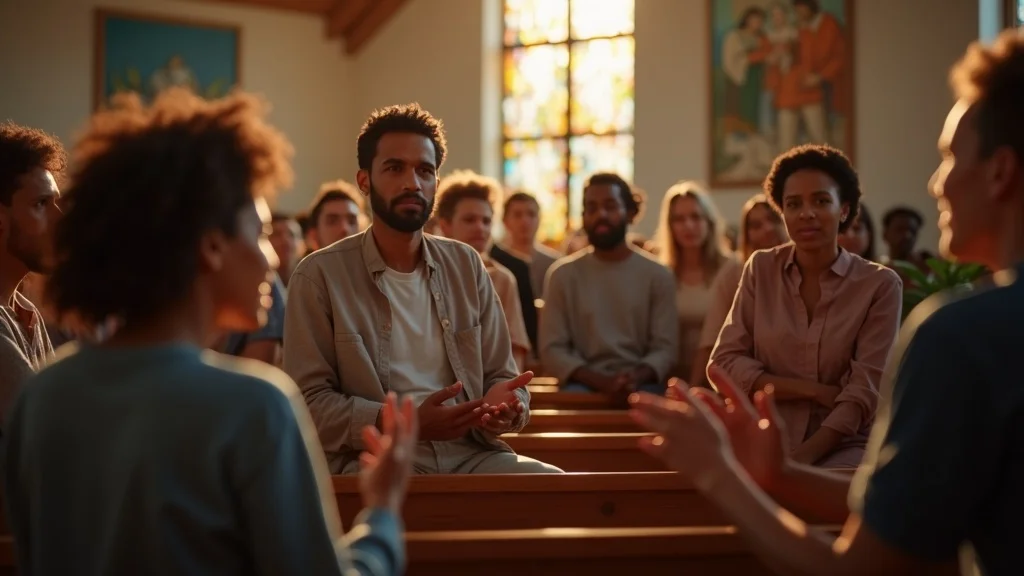
Church congregation in a modern, welcoming interior having a thoughtful discussion about their church identity and mission

The Cost of Getting Church Visual Identity Wrong

  • Alienating the very people you want to reach

  • Losing the chance to connect vision with your wider community

  • Missing the opportunity to attract new families and future volunteers

When a church’s visual identity is off, it usually goes wrong in one of two ways. Either it unintentionally alienates people—perhaps feeling dated, insular, or overly “churchy” to those with little church background—or it simply fails to communicate anything beyond, “We exist. ” In both cases, the story-driven potential is wasted, and the visual identity becomes a barrier rather than a bridge.

For churches looking to move beyond generic visuals and truly reflect their unique mission, exploring practical approaches to branding and logo design for churches can provide actionable steps and inspiration for developing a more authentic identity.

Why Church Visuals Must Start With Story Archaeology, Not Just Design

The turning point for me was realising that the most effective church branding projects didn’t start with design at all. They started with excavation. Before I put pen to paper or cursor to canvas, I now treat every church branding project as a kind of story archaeology: I’m not inventing a brand; I’m uncovering what God has already been doing in and through that church and making it visible.

That’s why story-driven church branding—how to turn ‘who we are’ into visuals—always begins with questions, not colours. I want to know how the church began, what has shaped it, what the community around it is actually like, and what specific vision God has placed on that fellowship. This discovery process is what gives the visuals weight, meaning, and longevity. Without it, you only have decoration.

Visual identity should excavate your story, not just decorate your notice board.

Dan Nichols - CGD

Inside My 4-Layer Story-Driven Branding Process

Over time, I’ve developed a simple four-layer process I use with churches to uncover their unique visual DNA. It’s structured enough to be repeatable, but flexible enough to honour each local story.

  • 1. History Dig: Unearth your church’s heritage and spiritual DNA

I begin by listening. How did the church start? What crises, revivals, or turning points have marked its life? Are there local phrases, stories, or moments that everyone in the fellowship recognises? This “history dig” often surfaces themes—faithfulness, hospitality, youth work, recovery, intergenerational family—that later become the backbone of the visual identity.

  • 2. Demographics Lens: Understand your local community and target audience

Next, I look outward. Who actually lives in your parish or neighbourhood? Is it largely older, retired adults, young professionals, families with toddlers, or a mix? What about deprivation levels, cultural backgrounds, or language needs? Story-driven branding that ignores demographics becomes fantasy. I want the story we tell visually to resonate both with your current congregation and with the people you’re prayerfully trying to reach.

  • 3. Vision Mapping: Clarify your core message, mission, and what sets you apart

I then work with leaders to articulate, in plain language, what God has called this church to do in this place at this time. Not a generic strapline, but a clear sense of direction. Are you primarily discipling long-standing believers, reaching unchurched families, serving those in crisis, or building cross-cultural community? This step is where story-driven church branding really takes shape, because we’re sharpening the “why” before we touch the “how. ”

  • 4. Design Translation: Convert these truths into magnetic logos, colour schemes, and visuals

Only then do I start designing. I translate those historical themes, demographic realities, and vision statements into specific design decisions: logo concepts, colour palettes, typography, photography style, and supporting graphics. At this stage I’m constantly asking, “Does this look like them? Does this feel like them? Does this tell their story in a way their community can recognise?” That’s how visual identity becomes more than aesthetics—it becomes mission in visual form.

Hands arranging church branding sketches, colour palettes, and historic photos on a creative moodboard table

Real-World Transformation: The Stenson Fields Fellowship Example

One church that convinced me, very practically, that church brand storytelling matters is Stenson Fields Christian Fellowship. On paper, they could have been “another small UK church on the edge of town.” But their story, once we excavated it, was richer and more specific than that: a Bible-centred fellowship, rooted in a rural community, with a deep desire for growth—in faith, in community, and in outreach.

They didn’t need a flashy logo to impress other churches on social media; they needed a coherent visual identity that felt like them and spoke clearly to their neighbours. The result was a mark that has quietly but powerfully reshaped how they are perceived and how they perceive themselves.

A logo rooted in story can invite, grow, and unite like nothing else.

Dan Nichols - CGD

How Story-Driven Branding Draws In Community: The Open Bible & Rolling Fields

  • Symbolizes Biblical foundation and community roots

  • Green rolling pages = growth, belonging, open invitation

  • Flexible for digital, print, and outreach contexts

Illustrated church logo of an open Bible morphing into rolling green fields, symbolising faith and community

Because the concept is story-driven, it works brilliantly across formats—on signage, websites, social media, printed invitations, and event banners. People recognise it. They remember it. And importantly, members of the fellowship feel that “this is us. ” That sense of ownership is crucial; when visuals feel authentic, the congregation is more confident to invite, promote, and share what the church is doing.

ROI of Church Visual Storytelling: Proving Mission Impact & Funding Value

One of the most frequent questions I hear from UK church leaders is, “How do I justify spending money on branding when there are so many other needs?” The answer lies in reframing story-driven church branding not as “pretty pictures” but as practical mission infrastructure. If visuals shape how people first encounter your church, then they directly affect outreach, volunteer engagement, and new visitor retention.

When leaders start to track these outcomes alongside their visual identity work, they can clearly see the return on investment. Story-driven church branding—how to turn ‘who we are’ into visuals—becomes something you can talk about with your PCC, trustees, or denomination as part of evangelism and community engagement, not a side hobby for the creative types.

How Visual Identity Accelerates Outreach, Volunteer Growth, and New Family Retention

  • Outreach: Visuals communicate welcome before a word is spoken

Most people’s first interaction with your church isn’t a handshake at the door; it’s a Google search result, a Facebook event graphic, a leaflet on a café counter, or a notice board at the end of the road. When those visuals are coherent, warm, and rooted in your story, they quietly say, “We see you. There is a place for you here. ” That’s outreach before any sermon is preached.

  • Volunteer Recruitment: Distinct identity attracts like-hearted leaders

A clear, distinctive visual identity also draws in volunteers who resonate with your particular vision. If your branding clearly communicates, for example, a strong family focus, a heart for the elderly, or a passion for cross-cultural ministry, people who care about those things are more likely to say, “I can see myself serving here. ” Visuals act as a filter and a magnet at the same time.

  • New Visitor Retention: Story-driven graphics make first-timers feel part of something bigger

When new visitors arrive and discover that the signage, service sheets, kids’ materials, website, and social media all feel like different expressions of the same story, it builds trust. They sense there is thought, care, and consistency here. That subtle sense of coherence can make the difference between a one-off visit and the beginning of a long-term church home.

Outdoor church community event with families and volunteers interacting, framed by cohesive branded colours and visuals

Grant-Winning Language: Branding as Community Engagement and Digital Accessibility

  • Reframe ‘branding’ as ‘community engagement’ or ‘digital inclusion’ for grant applications

  • Story-led visuals support measurable community connection

When it comes to funding, the language you use matters. In many UK contexts, “branding” can sound frivolous or corporate, whereas terms like “community engagement,” “digital inclusion,” “accessible communication,” or “new visitor retention” are far easier to defend in grant applications and church meetings. The work is the same; the framing is different—and more accurate to what’s really going on.

For example, investing in a story-driven website and visual identity can legitimately be presented as improving digital accessibility for older members, clearly signposting support services, or reducing barriers for those with no church background. When I work with churches, I often help them articulate these benefits in plain, grant-friendly language, so they can demonstrate that story-driven church branding is directly serving their community, not just improving their aesthetics.

Action Steps: Your Church Branding Audit & Story Excavation Starter Kit

If you want to begin moving toward story-driven church branding—turning ‘who we are’ into visuals—you don’t have to start with a full rebrand. Start with a pause. Step back from the weekly rush of services and rotas, and look at how your church currently appears to someone seeing you for the first time, both online and offline.

  • Audit: Review logos and visuals across all platforms—ask: does this tell our story or just display our name?

  • Community Eyes: Gather feedback from both insiders and newcomers

  • Get Perspective: Invite experienced church designers for an outside look

  • Mindset Shift: Brand visuals are ministry, not art for art’s sake

Begin by printing or screenshotting everything: your logo, notice sheets, website homepage, social media profiles, signage, event flyers, kids’ ministry materials. Lay them all out and ask, “If I knew nothing about this church, what would I assume we care about? Who would I think this is for? Would I feel welcome?” Then ask a few trusted people—both long-term members and recent visitors—the same questions.
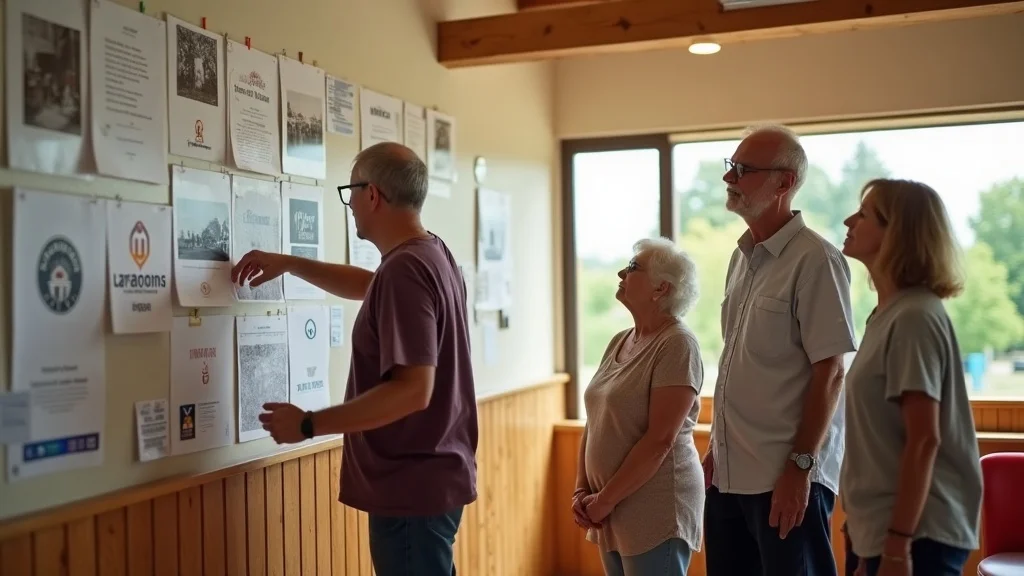
Multi-generational church members reviewing logo concepts and historic photos pinned to a board in a bright hall

Key Takeaways for Church Leaders: Visuals as Story, Not Just Decoration

  • Begin every visual discussion with your unique story—not trends

  • Revisit and revise branding as your mission evolves

  • Consistent, story-driven visuals yield tangible community impact

The most important shift is seeing your church’s visual identity as part of your ministry, not separate from it. Every graphic, sign, and image either supports your mission or distracts from it. When you root your visuals in story, you’re not chasing trends; you’re giving people a clear, hospitable glimpse of who you are and what God has called you to do in your particular place.

Ready to Transform Your Church’s Visual Identity?

Story-driven church branding—how to turn ‘who we are’ into visuals—is not about making your church look like the latest megachurch on Instagram. It’s about faithfully, creatively, and clearly expressing the story God has already written into your fellowship, so the people around you can actually see it.

If you’re a church or ministry leader and you sense that your current visuals don’t quite match who you are—or who you’re becoming—now is the time to start the excavation. Audit what you have, listen to your people, study your community, and then, if you need a guide, bring in someone who understands both church life and design to help translate that story into visuals.

This is not cosmetic work. It’s mission work. And when you get it right, it doesn’t just look better; it helps more people encounter Jesus through a church that finally looks like the story it’s called to tell.

If you’re inspired to take your church’s visual identity to the next level, consider exploring the broader principles and strategies behind effective branding and logo design for churches. Delving deeper into this topic can help you understand how intentional branding not only shapes perception but also strengthens your church’s connection with the wider community. By investing in a thoughtful, story-driven approach, you’ll be equipped to create visuals that resonate, invite, and endure. Start your journey towards a more impactful and authentic church presence—one that truly reflects your mission and vision for years to come.


To deepen your understanding of story-driven church branding and effectively translating your church’s identity into compelling visuals, consider exploring the following resources:

  • “Church Branding: Ultimate Guide for Ministries” offers a comprehensive overview of how to define and express your church’s identity through visual design, messaging, and experiences that reflect its mission and values. (ministrybrands.com)

  • “Church Branding: What Your Mission Looks Like” discusses the importance of aligning your church’s visual elements with its mission, providing insights into creating a brand that authentically represents your congregation’s calling. (logos.com)

These resources provide practical guidance and strategies to help you craft a visual identity that resonates with your community and effectively communicates your church’s unique story.

News & Offers

2 Views

0 Comments

Write A Comment

*
*
Please complete the captcha to submit your comment.
Related Posts All Posts
05.30.2026

Understanding the New EHRC Guidance on Gender Rights: A Compassionate Overview

Update The New Guidance on Sex and Gender: What You Need to Know The recent updates by the Equality and Human Rights Commission (EHRC) aim to clarify the often confusing relationship between sex and gender under the Equality Act 2010. After years of ambiguity, the new guidance provides clear directives regarding service providers’ responsibilities. Specifically, it emphasizes the importance of single-sex services, particularly in contexts where individuals might be vulnerable, such as healthcare and community spaces. Understanding the Implications of the Guidance Notably, the updated guidance states that service providers must now operate under stricter conditions regarding transgender access to single-sex services. If a service is intended only for women, admitting trans women may result in unlawful sex discrimination against non-transgender women. This clarification aims to balance the rights of all individuals while providing necessary protections, particularly for vulnerable women who may feel uncomfortable sharing spaces with individuals who are biologically male. The Role of Service Providers in Upholding Rights Service providers must now take the EHRC's guidance seriously and act responsibly. The code removes the previous allowance for service providers to claim ignorance as a reason for inaction. It also encourages them to consider the needs of both the women using their services as well as the transgender individuals who seek access. This approach is reflective of a society striving for equality and balance, addressing both sides of a complex issue. Why These Changes Matter to the Community Understanding the EHRC's guidance is crucial for community organizations and individuals, especially those involved in health and social services. The new regulations urge these organizations to recognize the legitimate concerns of women while providing thoughtful and appropriate access for those who are transgender. Striking this balance is not only a legal requirement but a social one, promoting understanding among diverse community members. The Future of Gender Rights in Society Looking ahead, the conversation surrounding gender rights in society is likely to evolve. The EHRC guidance presents an opportunity for communities to engage in discussions that foster understanding between differing viewpoints. As the government prepares to solidify its regulations, inclusive dialogues could pave the way for a framework that defends freedoms while protecting life's sanctity for all community members. Engage and Stay Updated It is essential to remain informed about these changes and to participate in dialogues that affect the community’s approach to gender rights. The ongoing discussion will not only shape the experiences of service users today but will also lay the groundwork for future generations facing similar challenges. With the complexity of this topic, the voice of each community member is valuable in shaping policies that reflect the hope of Jesus Christ, protect life, promote family, and maintain a balance of freedoms. As we delve deeper into these topics, let us approach them with compassion and understanding, fostering a society where everyone's dignity is upheld.

05.29.2026

Labour MPs Urge Islamophobia Investigation in Reform UK: What’s at Stake?

Update A Call for Investigation into Alleged Islamophobia In a bold move, 27 Labour MPs have formally requested an investigation into allegations of Islamophobia within the Reform UK party, led by Nigel Farage. This letter was directed to Mary-Ann Stephenson, the chairperson of the Equality and Human Rights Commission (EHRC), emphasizing potential breaches of the Equality Act 2010 by the party. The MPs argue that Reform UK lacks an adequate process for addressing grievances related to Islamophobia and has consistently failed to confront a growing issue that they say endangers Muslim communities and social cohesion in Britain. Concerns Over Social Cohesion Afzal Khan, the MP for Manchester Rusholme, highlighted that the lack of action from Reform UK has resulted in repeated attacks on Muslim communities. “The consistent attacks on Muslim communities are putting Muslims in Britain in danger and social cohesion at risk,” Khan stated in the letter. These remarks resonate beyond politics, as many in the community express apprehensions regarding their safety and acceptance in society. Notable Instances of Alleged Islamophobia The MPs pointed out specific comments made by members of Reform UK that they deem Islamophobic, which date back several years. One instance includes Farage's remarks calling for a ban on mass religious observances, which he linked to an attempt to “overtake, intimidate and dominate our way of life.” This has raised troubling questions about the impact such statements have on the Muslim community's perception of safety and inclusion within British society. The Responsibility of Political Leadership The letter from the MPs underlines that statements from elected officials can fuel a culture of intolerance. The fear is that when public figures make derogatory comments about a community, it emboldens others to express similar sentiments, which can lead to real-world consequences for social cohesion and inter-community relations. Reactions to the Initiative Responses to the Labour MPs' letter are varied. Some see it as a necessary call for accountability and a step towards ensuring that all communities feel safe and respected in the UK. Others, especially within Reform UK, assert their commitment to freedom of speech and refuse to be intimidated by what they term as politically motivated attacks against them. The Broader Context of Religious Freedom This situation speaks to an ongoing struggle that many face regarding the protection of religious freedoms. The hope of Jesus Christ and the commitment to protecting life, families, and freedoms should encourage dialogue and mutual understanding among communities. It is crucial for all to engage in respectful conversations that bolster harmony rather than division. A Step Towards Cohesion and Understanding Ultimately, the discussion surrounding this investigation is a vital opportunity for reflection on how we as a society can better protect our diverse communities. By promoting family values and defending freedom, we can encourage a culture where all voices are heard, and all community members feel valued and safe. Engaging in discussions about faith, politics, and community responsibility can pave the way for a more inclusive future.

05.23.2026

Master decision-making and stakeholder dynamics: Avoid design-by-committee

Most church branding problems are not actually design problems – they’re decision-making problems. When a business needs a new website or a rebrand, there’s usually a clear owner. A small leadership team decides, signs off, and the project moves. In churches, the same kind of project can drag on for months or even years – not because the designer is slow, but because the decision-making and stakeholder dynamics are unclear. I’ve seen beautifully thought-through church branding and website designs grind to a halt, not because they were wrong, but because nobody knew who could say, “Yes, let’s go. ” That’s where decision-making and stakeholder dynamics: getting consensus without design-by-committee becomes critical. The Hidden Enemy: Why Slow Church Decisions Aren’t Design Issues—They're Stakeholder Traps On the surface, a stalled branding or website project looks like a design issue: “We’re not sure about that font,” “Those colours feel a bit bold,” “Some people don’t like the logo. ” Underneath, it’s nearly always a leadership and communication issue – specifically, how church leadership communication is handled and how decisions are made. In a typical business, a couple of managers own the decision. They understand the goal, they weigh up feedback, they make the call. In many churches, however, the leadership proposes an idea and then hands it over to the whole congregation for discussion, debate, and, unintentionally, redesign. The result is what I call “decision drift”: the original idea gets diluted, the process slows down, and sometimes nothing ever gets decided at all. Most church branding problems aren’t creative failures. They’re leadership bottlenecks. Dan Nichols When church decision-making lacks clarity, people assume they all have an equal vote on every detail. That’s when design-by-committee takes over – and vision quietly dies. The issue isn’t that people care too much; it’s that no one has been clear about who decides what. Spotting the Pitfalls: How ‘Design by Committee’ Kills Church Vision Design-by-committee feels collaborative, but it almost always produces weaker, slower, and more confusing communication. Here’s what it looks like in real life: Delayed progress and standstill projects – meetings multiply, but meaningful decisions don’t. Months pass and the old website or logo still remains “for now”. Diluted vision and confused messaging – to keep everyone vaguely happy, every strong idea gets softened until it says almost nothing with clarity. Endless debates over minor details (fonts, colours, etc.) – energy that should be spent on mission gets burned on preference-level discussions. Frustrated teams and disengaged congregations – leaders get weary, volunteers lose motivation, and the congregation stops taking “updates” seriously. When everyone gets a say but no one leads, nothing moves forward. Dan Nichols Healthy decision-making and stakeholder dynamics in church life don’t ignore people; they honour them by being clear about roles, process, and purpose from the start. Dan Nichols’ Epiphany: Clarity of Leadership Is the Real Catalyst for Consensus My turning point came when I watched a brilliant church project collapse – not because the design was wrong, but because the leadership process was. Case in Point: Why a Church’s New Website Launch Came to a Halt I was working with a church that wanted to refresh their online presence. We went through a thoughtful process: understanding their ministries, clarifying their audiences, mapping the user journey, and designing a modern, clear, and welcoming website. The leadership team were genuinely excited and ready to move forward. Then the design was taken to a full church meeting. Leadership excited for a fresh church design proposal – they could see how it served mission, evangelism, and clarity for visitors. Lack of clarity when presented to congregation – instead of saying, “Here is the direction we’re taking; we welcome your encouragement and questions,” it was more like, “What does everyone think?” Unclear vision = confusion and resistance – people asked, “Why are we doing this? What’s wrong with what we have?” Without a clearly communicated “why”, the “what” felt unnecessary. Result: Project stalls indefinitely – the website never launched. The process simply came to a standstill. Clear vision shared up-front lets people say “yes” or “no” – and move on. Dan Nichols This experience crystalised something for me: the bottleneck wasn’t creativity; it was leadership clarity. The church didn’t have a shared understanding of who the decision-makers were, how stakeholder dynamics would work, or what kind of feedback was being invited. Without that, even good ideas die in committee. The Stakeholder Clarity Method: My 3-Step Framework for Effective Decision-Making Over time, I’ve developed a simple framework to help churches master decision-making and stakeholder dynamics: getting consensus without design-by-committee. I call it the Stakeholder Clarity Method. It’s not complicated, but it is deliberate. Step 1: Define the Decision Makers and Roles Before You Start Every successful church branding or communication project I’ve seen has started with a clear answer to one question: Who is actually deciding this? Before a single logo, colour palette, or webpage layout is discussed, I work with church leaders to map out roles. Typically, that means: A primary decision-maker or small leadership team (elders, senior pastor, or a comms lead) who has final sign-off. A clearly defined group of key stakeholders (perhaps ministry leaders) who are consulted but do not own the final decision. The wider congregation, who are informed, encouraged, and sometimes invited to respond – but not to re-architect the project. When everyone in the church understands where they fit in that picture, trust increases and friction decreases. People generally don’t mind not being the decision-maker; they do mind thinking they had a vote, only to find out they didn’t. Step 2: Cast a Clear and Inspiring Vision—Don’t Debate the Details Most branding and communication projects fall over because the “why” is neglected and the “what” gets over-emphasised. The congregation is asked what they think about fonts and colours before they’ve ever been shown the mission and strategy those designs are meant to serve. Instead, I encourage leaders to begin with vision: What are we trying to achieve with this new website, logo, or visual identity? Who are we seeking to reach and serve more clearly? How will this help us communicate the gospel and church life more effectively? Once that’s crystal clear, it becomes much easier for people to say, “I see where we’re going,” even if they personally preferred a different shade of blue. Vision anchors everything. Without it, every design choice becomes a personal preference battle. The goal of church leadership communication here isn’t to invite a thousand opinions on minor details; it’s to unite people around a shared purpose so those details become less important. For churches seeking to deepen their understanding of how foundational truths shape communication and vision, exploring the theological roots of leadership can be enlightening. For example, examining how Jesus is described as the Word of God in John 1:1–18 offers a powerful perspective on clarity and purpose in both message and mission. Step 3: Feedback with Boundaries—How to Gather Input Without Chaos Feedback is vital. But unstructured, limitless feedback is exhausting and counter-productive. Step three is where I help churches put healthy boundaries around input, so we can maintain direction without shutting people out. Share the “What” and the “Why” with the wider church – present the project as a clear direction, not as an open-ended brainstorm. Limit feedback to key leadership or a defined group – invited voices who understand the brief and the constraints, rather than a free-for-all. Frame input as “Yay or Nay” on the direction, not on trivialities – “Does this reflect who we are and who we’re trying to reach?” rather than “Who likes serif fonts?” This is what healthy stakeholder dynamics look like in a church context: everyone is respected, but not everyone is invited to redesign the project from scratch. Input is guided, time-bound, and focused on mission, not purely taste. Collaboration vs. Clarity: Why ‘More Voices’ Doesn’t Mean Better Outcomes Churches are rightly wary of top-down authoritarian leadership. So when I talk about avoiding design-by-committee, the fear can be, “Are we cutting people out?” In my experience, the exact opposite is true. Collaboration flourishes when clarity is strong. The Danger of Getting Agreement Versus Getting Approval Many leaders unconsciously aim for 100% agreement. That sounds godly and gracious, but in practice it’s paralysing. The pursuit of unanimous agreement on everything leads to endless conversation and very little action. Collaboration is about contributing ideas, not vetoing progress – people bring wisdom, context, and questions, but don’t hold an informal veto over every decision. Clarity means leaders make the call—consult, then lead – leadership teams listen carefully, weigh up what they’ve heard, then move decisively in a clear direction. The aim is not “Everyone must like this,” but “Everyone understands this, and we are moving forward together. ” That’s the heart of effective decision-making and stakeholder dynamics: getting consensus without design-by-committee. When to Decide and When to Listen: My Guiding Principles Over years of working with churches, a few guiding principles have emerged that help me advise leaders on when to listen widely and when to decide firmly: Listen early for needs and context – before any designs are produced, listen broadly: What are people struggling with on the website? Who feels unseen? What information is hard to find? Decide on vision and direction at the leadership table – once you’ve listened, step back as a leadership team and set a clear direction based on mission, not just comfort. Involve broader input only to affirm the chosen path, not to start from scratch – share the proposed direction and invite encouragement, questions, and practical concerns, not fresh blue-sky redesign. That balance – listening early, deciding clearly, and then inviting bounded feedback – is what prevents design-by-committee while still honouring the body of Christ. Action Steps: How to Streamline Decision-Making and Energise Your Church Communication If you recognise your church in any of this, here are some practical steps you can take right now to improve your church decision-making around branding and communication: Audit your current stakeholder and decision-making process—where is clarity missing?Ask: Who thinks they’re a decision-maker? Who actually is? Where are projects getting stuck? Put it on paper. Appoint a clear leadership decision-maker or team for key projectsName them publicly. Give them responsibility and the trust to act. Communicate the vision forcefully before requesting any feedbackExplain the “why” behind the project in sermons, members’ meetings, or written communication before you show any visuals. Set boundaries for feedback: When, who, how muchDefine who will be consulted, what kind of feedback is helpful, and when the window for input closes. These steps might feel simple, but they directly address the core issues in decision-making and stakeholder dynamics: getting consensus without design-by-committee. They move you from vague “involvement” to purposeful, mission-driven collaboration. FAQs: Decision-Making & Stakeholder Dynamics in Church Branding How can churches gather congregational feedback while avoiding endless debates?The key is to structure feedback. Share the vision and proposed direction first, then invite input within a defined window and from clearly identified groups. Ask specific questions: “Does this help us communicate clearly to newcomers?” rather than “What does everyone think?” This keeps discussions focused on mission impact instead of personal preference. What’s the best way to communicate decisions once they’re made?Be clear, honest, and pastoral. Explain not just what you’ve decided, but why – how the decision serves your core mission and people. Use multiple channels (Sunday services, emails, meetings, website) and allow space for questions, but be confident about the direction. When leaders communicate with conviction and humility, most people will gladly follow, even if it wasn’t their first choice. How do you handle objections without losing momentum?First, listen carefully and acknowledge genuine concerns; people need to feel heard. Then, weigh those concerns against the agreed vision and timeline. If the objection reveals a serious oversight, adjust; if it’s primarily preference-based, thank them, restate the vision, and keep moving. Momentum is preserved when leaders are both compassionate and decisive. Key Takeaways: How to Lead Bravely—and Avoid Design by Committee Decisiveness and clarity unlock progress in church branding – when roles, vision, and process are clear, projects move and communication strengthens. Shared vision beats shared decision-making – you don’t need everyone to design the project; you need everyone to understand and own the mission behind it. Boundaries on input lead to unity, not division – when people know how and when they can contribute, trust grows and conflict reduces. Healthy decision-making and stakeholder dynamics don’t silence voices; they give every voice its right place so that the church can move forward together with clarity and conviction. Ready to Build Real Momentum? Download the Church Design Decision Framework If you’re tired of stalled projects, endless debates, and branding that never quite lands, it may be time to reset how your church makes communication decisions. I’ve distilled these principles into a simple, practical resource – the Church Design Decision Framework. Use it with your leadership team to clarify roles, shape your process, and structure feedback so that you can finally experience decision-making and stakeholder dynamics: getting consensus without design-by-committee. Download the framework, sit down with your leaders, and decide together how you’ll lead your next project with clarity, courage, and unity. If you’re eager to take your church’s communication and leadership to the next level, consider exploring how biblical principles inform every aspect of your ministry. Delving into topics like understanding Jesus as the Word of God in John 1:1–18 can provide a deeper foundation for your team’s unity and vision. By connecting practical leadership strategies with scriptural insight, you’ll be better equipped to foster clarity, inspire your congregation, and lead with confidence in every season of church life. To enhance your understanding of church leadership and effective stakeholder management, explore Unpacking John 1:1–18 – Understanding Jesus as the Word of God. This article offers valuable theological insight into how biblical principles underpin leadership clarity and communication. Additionally, Biblical Living Unlocked is a resource hub that provides in-depth scriptural perspectives on applying foundational truths to all aspects of church life, including consensus-building and communication strategy. If you’re serious about decision-making and stakeholder dynamics in church contexts, these resources will give you both a theological foundation and practical tools for effective leadership.

Terms of Service

Privacy Policy

Core Modal Title

Sorry, no results found

You Might Find These Articles Interesting

T
Please Check Your Email
We Will Be Following Up Shortly
*
*
*