Add Row
Add Element
cropper
update

Biblical Living Unlocked

Logo - Biblical living unlocked
update
Add Element
  • Home
  • Categories
    • Biblical Parenting
    • Parenting Tips
    • Family Fellowship
    • Bible Teaching
    • Apologetics
    • Community Stories
    • Youth Focus
    • International
    • Walton Evangelical Church
    • Salt Church Mar Menor
    • Salt Church Los Montesinos
    • John Piper
    • News & Offers
Add Element
  • Ken on Facebook
    update
  • update
  • update
  • update
  • update
  • update
  • update
May 17.2025
2 Minutes Read

Saudi Arabia and France's Bold Move to Mandate Palestinian State: Implications for Christians

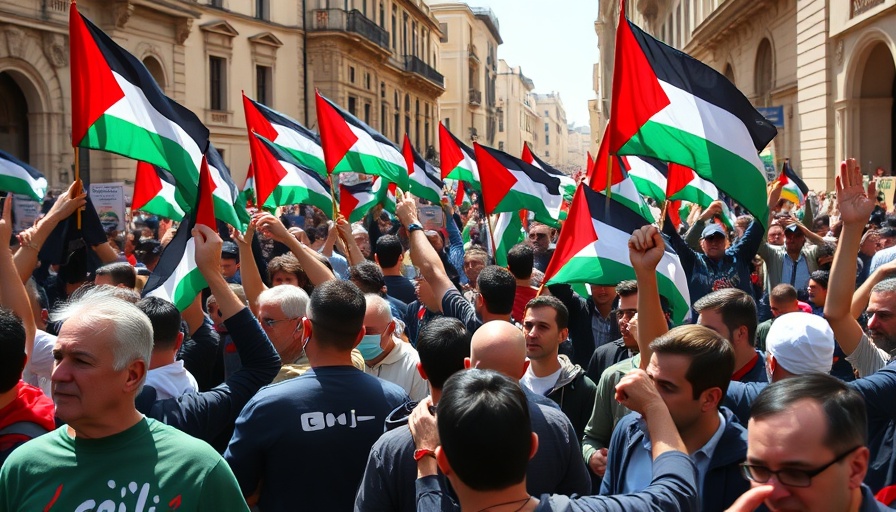
Protestors advocating for a Palestinian state without Israeli input.

The looming deadline: Saudi Arabia and France's mandate for Palestine

In a bold and controversial move, Saudi Arabia and France are gearing up to implement a Palestinian state without input from Israel, beginning with a June UN-backed conference intended to set a binding timeline. This decision is raising alarm among many who question the ramifications for regional stability.

Understanding the consequences: Is this a step toward peace or discord?

The plan introduces sanctions for non-compliance, a tactic that critiques Israel's security interests, which have long been at the forefront of the nation’s policies. For many Israeli citizens—and advocates for Israel internationally—this development raises critical questions about the future of Israeli-Palestinian relations. Will sidelining Israel help foster an environment for peace, or will it only deepen existing divides?

Global implications: How this affects interfaith dialogue

For Christians worldwide caring about the Middle East, this initiative impacts more than just politics. There are profound theological and humanitarian implications. As proponents of interfaith dialogue strive for peaceful coexistence, moves like this one may complicate efforts to bridge divides. Engaged believers often advocate for peaceful engagement and coexistence, which may now face significant challenges as tensions increase.

What can Christians do? A compassionate response to conflict

This situation offers a unique opportunity for mission-minded individuals to respond with compassion. Social justice advocates can support initiatives that promote dialogue and understanding rather than division. The church can provide a strong voice advocating for peace that stresses mutual recognition, respect, and the acknowledgment of the rich histories of both Palestinians and Israelis.

Inspiration from history: Learning from past conflicts

Historically, political interventions often complicate local disputes instead of resolving them. From the Oslo Accords to various UN resolutions, the patterns are clear: without genuine local commitment to dialogue and recognition, imposed solutions tend to offer temporary relief rather than long-term peace. As followers of Christ reflect on this history, they might find themselves invigorated to pray for, and engage in, more constructive dialogue.

Call to action: How to engage with the unfolding narrative

As citizens and believers, it is essential to keep abreast of developments like these and understand their impacts. Engaging with mission agencies that work in the region, supporting dialogues that enhance understanding, and advocating for policies promoting coexistence can make a difference. Furthermore, we can pray for a miraculous movement towards peace in a situation that all too often spirals into further conflict.

In conclusion, as the situation develops, let's continue to seek understanding and peace. By advocating for respectful dialogue and empathizing with both sides, we can work toward solutions that honor the humanity and dignity of all involved.

International

20 Views

0 Comments

Write A Comment

*
*
Related Posts All Posts
03.11.2026

Israel's Northern Front Strengthens Amid Hezbollah Escalation: What You Need to Know

Update Heightened Tensions: Israel’s Northern Front in FocusAs tensions escalate along the northern borders of Israel, the Israel Defense Forces (IDF) are ramping up preparations in response to an increasing threat from Hezbollah. This military readiness comes amid ongoing conflicts in the region, prompting IDF Chief of Staff Zamir to order reinforcements after a thorough assessment linked to Operation Roaring Lion. These developments highlight the precarious security situation that Israel faces, not just from its immediate neighbors but from a complex web of geopolitical relationships.Understanding Operation Roaring LionOperation Roaring Lion has swiftly taken center stage in the conflict. This initiative reflects Israel’s response to what they perceive as an existential threat from Hezbollah, a militant group backed by Iran. The operation aims to deter hostilities by demonstrating IDF readiness to act in defense of its territory. Analysts suggest this operation could be a pivotal moment in shaping future Israeli strategies concerning northern border security.The Human Impact: Stories from the GroundThe ongoing escalation impacts not only military strategies but also the civilian population living near the border. Families are navigating a reality filled with uncertainty, where every loud noise can trigger anxiety and fear. Community centers are organizing support networks to help people adjust to the heightened tensions. The resilience of these communities is commendable, as they find ways to support each other amidst the fear of conflict.Broader Implications for Global SecurityThe tensions in northern Israel offer a broader picture of security challenges worldwide. For Christians, who are closely monitoring the situation due to longstanding ties in the region, these developments raise questions about humanitarian support. As organizations mobilize to offer aid, the global Christian community must navigate their roles in advocacy and support while keeping equity and compassion at the forefront.What You Can Do: Engage and AdvocateFor those invested in the well-being of communities affected by conflict, staying informed and advocating for peace is crucial. Engaging in interfaith dialogue can foster understanding and cooperation. By sharing insights and building connections across different communities—both local and international—we can create a network of support aimed at reducing tensions and promoting stability.

03.11.2026

The Penal Code's Impact on Afghan Women: A Wake-Up Call for Action

Update The Current State of Women’s Rights in Afghanistan On March 8, 2026, the world marked International Women’s Day, but in Afghanistan, the day is overshadowed by the Taliban’s oppressive penal code that poses dire threats to women's rights. Since retaking control in August 2021, the Taliban has not only stripped women of their freedoms but has also instituted new laws that allow for severe forms of violence against them. Unveiling the Penal Code: Legalizing Abuse A newly leaked penal code has drawn considerable attention, detailing a range of restrictions that specifically target women. Notably, the code permits husbands to physically abuse their wives, provided it doesn’t result in broken bones or visible long-lasting marks. Such legal allowances normalize domestic violence, presenting grave risks for women, particularly those who convert to Christianity. As reports show, the penalties for leaving Islam can lead to fatal consequences. The provisions within this code have been described as serious concerns for the safety and well-being of women and girls in Afghanistan. Echoes of Discrimination: More Than a Legal Issue This penal code is not merely a series of unjust laws; it represents a systematic legal framework that enshrines gender discrimination and violence as part of daily life. Another alarming feature is the classification of social status, effectively dividing Afghan citizens into various tiers—free and enslaved. This stratification allows for harsh punishments to be levied against the lower classes, including increased violence against women, who are frequently targeted as property lacking legal autonomy. The International Response: Call for Action Internationally, there has been little tangible response to these troubling developments beyond local conversations. UN officials have emerged expressing concern, but the silence from major countries remains deafening. The policies executed under the Taliban regime are foundationally anti-human rights and only serve to perpetuate a cycle of oppression. Advocacy groups are urging the international community to condemn these regulations, emphasizing the desperate need for accountability and support for Afghan women. Healthcare Crisis: A Further Layer of Oppression Beyond legal restrictions, Afghan women face mounting dangers in healthcare access. Under Taliban-imposed regulations, many women are often denied emergency medical care if they are unaccompanied by a male guardian or dressed according to strict codes. Testimonies recount women forced to give birth at hospital gates for lack of a male escort. Such barriers to healthcare threaten women's lives and further marginalize their already precarious situation in Afghan society, as noted by UN health experts. Grassroots Resilience: Stories of Hope Despite the overwhelming oppression, stories of women standing up against the Taliban’s restrictions have begun to surface. For instance, many women have begun to mobilize in covert networks, creating support systems that allow them to share their experiences and advocate for their rights, often at great personal risk. One notable example is the story of Ariana, who manages a ministry for refugee women in her new country after escaping the Taliban’s oppressive regime. Her work highlights that even in dire circumstances, the light of hope and courage can shine through. What Lies Ahead: An Urgent Call to Action The conditions for women in Afghanistan are dire, with threats of violence legitimized under Sharia law, hampering their freedom and agency. The international community must voice its condemnation and weigh in on the pressing issues that Afghan women face daily. Without public acknowledgment and actions that address these atrocities, the plight of Afghan women will continue to degrade, trapping them further behind invisible barriers. In closing, the situation remains dire, and it's crucial for advocates to amplify their voices and support initiatives that protect women's rights in Afghanistan. Let us join in prayer and action, hoping to restore dignity, safety, and justice for our sisters in no part of the world should endure such suffering.

03.11.2026

The Ripple Effect of Following Jesus in Iran: A Call for Global Advocacy

Update A Journey Through Faith: The Reality of Iranian Christians The gripping narrative of Simin, an Iranian Christian woman, sheds light on the extraordinary lives of those who dare to follow Jesus in a country riddled with persecution. From her safe haven outside Iran, Simin bears witness to the daily struggles and resilience of believers who remain in the nation, facing endless threats for the heartfelt commitment to their faith. Escalating Persecution: The Environment of Fear As reported by various human rights organizations, the last few years in Iran have been marked by a surge in anti-Christian persecution. The Iranian regime views Christians as national security threats, especially those who convert from Islam. During a climate of intense scrutiny and governmental repression, more than 139 Christians were arrested in 2024 alone, reflecting the alarming reality for those within Iranian borders. According to an article published by Open Doors, many believers have been sentenced to lengthy prison terms, and fines have become burdensome, often reaching hundreds of thousands of dollars. Consequently, Simin’s family, deeply involved in ministry, suffers the repercussions of this systemic crackdown. Her father grapples with crippling fines while trying to support his family, showcasing the heavy toll faith can take on even the most resilient families. A Glimmer of Hope Amidst Trials Yet, amidst the darkness, a remarkable spirit of hope and community persists among Iranian Christians. Despite frequent arrests and ongoing surveillance, the underground church continues to grow, a testament to the unwavering faith of those involved. Reports indicate that there are approximately 800,000 Christians in Iran, many worshipping in clandestine house churches. Recent protests have brought a surge of emotional support and solidarity within the Christian community. As articulated by Ryan Brown of Open Doors, Iranian Christians are focused not on the violence, but on prayer and a yearning for freedom—a powerful reminder of their commitment to faith in the face of adversity. The Impact of Communication Blackouts The increasingly volatile situation in Iran includes regular communication blackouts, which leave many like Simin in despair about the safety of their loved ones. “The days without news from your family are incredibly painful,” she laments. During periods of silence, important updates about the protests often remain unknown. This disconnect underscores the spiritual war Simin describes, reflecting the myriad ways faith and freedom collide in a repressive landscape. Resilience and Community: The Heart of Iranian Believers The emotional fortitude exhibited by Simin and her peers embodies a community deeply rooted in faith. Those who remain inside Iran continue to support one another, even in the face of isolation. Bold acts of love like aiding the injured during protests remind believers that their spiritual mission extends beyond personal safety to the welfare of others—a striking reminder of the sacrifices embedded in their faith journey. In light of their circumstances, many have found a newfound purpose in life, showing that even in exile, a profound connection to their roots and a commitment to serve remains paramount. Global Response: What Can Be Done? The Church worldwide is called to remember the plight of our brothers and sisters in Iran. These resilient, prayerful Christians are asking for connection and advocacy from those outside their borders. As their story unfolds, Christians abroad can provide meaningful support through prayer campaigns and raising awareness about their struggles. As international events unfold, let those of us removed from these trials remember to speak out against injustice, advocate for religious freedom, and lift our voices in prayer for peace and protection for all oppressed believers in Iran. Conclusion: The Courage of Following Jesus To follow Jesus in Iran is not just a religious commitment; it is a courageous act that can very well lead to severe consequences, both for oneself and for loved ones. Yet, the unwavering hope and resilience of these believers lace through their stories, illuminating the profound ripple effect of faith. Their journey reminds us of the ongoing struggle for religious freedom and the necessity of solidarity in faith amidst adversity. As mission-minded individuals and advocates for social justice, we are invited to join in this journey—praying, acting, and sharing the stories of those who continue to stand firm in their beliefs despite overwhelming odds. Will you take a moment to advocate for those who live out love and faith against a backdrop of turmoil?

Terms of Service

Privacy Policy

Core Modal Title

Sorry, no results found

You Might Find These Articles Interesting

T
Please Check Your Email
We Will Be Following Up Shortly
*
*
*