Add Row
Add Element
cropper
update

Biblical Living Unlocked

Logo - Biblical living unlocked
update
Add Element
  • Home
  • Categories
    • Biblical Parenting
    • Parenting Tips
    • Family Fellowship
    • Bible Teaching
    • Apologetics
    • Community Stories
    • Youth Focus
    • International
    • Walton Evangelical Church
    • Salt Church Mar Menor
    • Salt Church Los Montesinos
    • John Piper
    • News & Offers
Add Element
  • Ken on Facebook
    update
  • update
  • update
  • update
  • update
  • update
  • update
July 13.2025
3 Minutes Read

Netanyahu's Determination to Eliminate Hamas: Key Insights for Christians

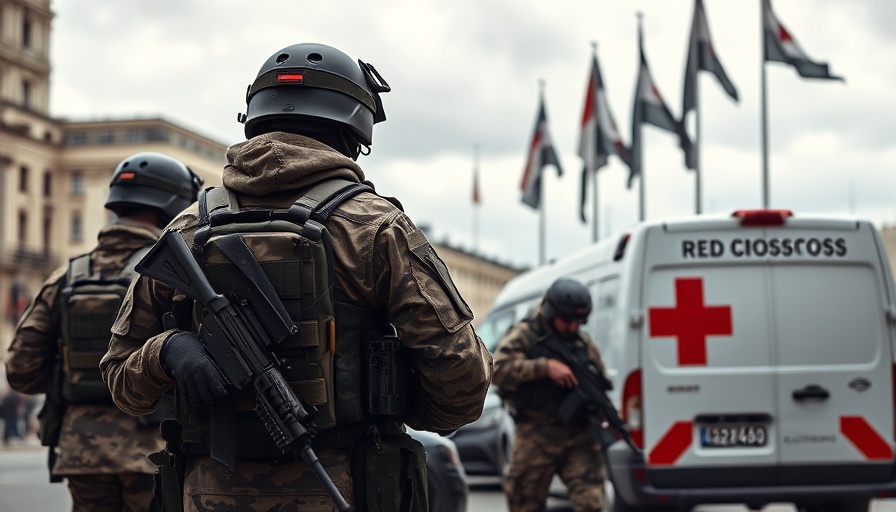
Armed soldiers near Red Cross vehicle, Netanyahu Eliminate Hamas.

Israel's Resolve to Combat Hamas: A Critical Stand

In a recent statement underscoring his resolve, Prime Minister Benjamin Netanyahu expressed a firm stance on dealing with Hamas, stating that while Israel has agreed to a potential deal for the release of hostages, the terrorist organization is reluctant to compromise. Netanyahu's declaration comes amidst rising public pressure and significant backlash against his handling of the negotiations.

Netanyahu emphasized the principle that any agreement should not empower Hamas to maintain control over Gaza, reinforcing his government’s commitment to eliminate the threat they pose. His perspective reflects a complex balance—a need for security in Israel coupled with the humanitarian concerns over hostages.

The Human Cost of Conflict: Families Caught in the Middle

The response from the Hostages and Missing Families Forum paints a vivid picture of the emotional turmoil surrounding the negotiations. Families of hostages are demanding transparency and clarity from their leaders, longing for information on the ongoing situation. Their outcry reveals a deeper issue at play; the intersection of political decisions and the profound human experiences behind them.

As actors in this tragic narrative, families highlight that the stakes are not merely political but deeply personal. This reminds us that in conflicts like these, where political and military strategies are employed, the hearts and lives of ordinary individuals are often overshadowed.

Public Sentiment: Surrendering to Hamas?

Polls indicate that a significant portion of the Israeli public favors a deal that could see hostages released, but Netanyahu counters this sentiment by cautioning against what he describes as a 'surrender' to Hamas. He challenges the perception that such a deal would bring peace, pressing the idea that making concessions might embolden the very threat Israel aims to neutralize.

This divergence in public opinion raises questions about the path forward. The balancing act of appeasing public sentiment while ensuring national security is a difficult task that Netanyahu must navigate carefully, indicating that any resolution must be approached with caution.

The Role of Faith and Humanitarian Perspectives

For mission-minded individuals and humanitarian-focused Christians, the situation evokes a profound moral imperative. Understanding the plight of those involved, informed believers are uniquely positioned to contribute to dialogues about peace and reconciliation in areas plagued by violence.

Engagement in advocacy, prayer for both Israeli and Palestinian communities, and support for humanitarian efforts can serve as a counterbalance to the complexities of conflict. In this regard, faith-based initiatives can foster understanding and encourage healing amidst the chaos.

Looking Forward: The Future of Peace in the Region

As negotiations are set to continue, the world watches closely. The dynamics between Israel and Hamas reflect broader geopolitical tensions in the Middle East that encompass historical grievances as well as future aspirations for peace. The international community's response, driven by diplomatic perspectives and local realities, may significantly influence any potential resolution.

While Netanyahu's stance is clear, the ramifications of continued conflict could have enduring impacts on all communities involved, including those of faith who advocate for peace. The need for a unified approach, founded on respect for humanity and the pursuit of justice, is crucial if the region hopes to overcome these entrenched hostilities.

Conclusion: A Call to Action

For those interested in the significance of this issue, it is essential to remain informed and engaged. As advocates for peace and understanding, your voice and support matter immensely. Consider how you can contribute to dialogues about this critical situation, whether through prayer, education, or advocacy efforts. Together, we can strive toward a more peaceful resolution that honors the dignity of all affected by this ongoing conflict.

International

19 Views

0 Comments

Write A Comment

*
*
Please complete the captcha to submit your comment.
Related Posts All Posts
04.20.2026

Capt. G.: A Symbol of Strength Amidst Hezbollah's Humiliation

Update A New Symbol of ResilienceIn a surprising turn of events, a female soldier from the Israel Defense Forces (IDF), who has been identified as Captain G., has become an unexpected symbol of resilience and humor in the face of adversity. Recently, a Lebanese news outlet published photographs of Captain G. operating deep within Lebanese territory, leading to a flurry of mockery aimed at Hezbollah, the militant organization that has often painted its operations in a victorious light. This incident highlights not only a moment of levity but deep undercurrents of historical and political complexities in the region.The Power of Social MediaThe photos shared on various social media platforms have sparked laughter among Israeli viewers, with users find irony in Hezbollah’s claims of victory. Captain G. herself commented on the situation, stating, "Mostly, we're just laughing about it." This reaction underscores not just an individual’s courage but also the collective resilience of a nation. Social media, often criticized for perpetuating negativity, in this case served as a platform for the expression of national pride, allowing citizens to unify and celebrate moments of unexpected joy.Historical Context of the ConflictThe tension between Israel and Hezbollah dates back decades, marked by numerous conflicts and war. Established in the early 1980s, Hezbollah has frequently asserted its military prowess against Israel, contributing to a narrative of resistance against a perceived oppressor. Captain G.’s story adds a new layer to this ongoing saga by showcasing the personal connections and humanity that often get lost in large-scale geopolitical narratives. Her presence in Lebanese territory challenges preconceived narratives of domination and control, presenting a nuanced perspective on the realities of modern conflict.Identity and Representation in the MilitaryThe elevation of a female soldier in a traditionally male-dominated space like the military also holds significance. Women in the IDF serve not only as combatants but as symbols of progress and change within Israeli society. As global movements increasingly advocate for gender equality, Captain G. stands as a representative of female empowerment in a national narrative often dominated by male figures. Her position emphasizes the evolving role of women in the military and encourages discussions about representation and gender roles in armed forces worldwide.A Call for ReflectionBeyond the immediate laughter shared on social media, this episode encourages deeper reflection on Israeli-Lebanese relations. It is a reminder of the complexities involved in armed conflict, where narratives are often intertwined with personal stories and cultural identities. Engaging with these narratives encourages policy advocates and scholars to look beyond statistics and military achievements, prompting a discourse that prioritizes human experiences amidst geopolitical struggles.Conclusion: Bridging Dialogues for PeaceAs we observe the developments surrounding Captain G. and her interaction with Hezbollah's narrative, it becomes essential to consider how humor and resilience can be powerful tools for bridging divides. For many Christians and people of faith, this incident exemplifies the need for dialogue over conflict. By fostering conversations around shared humanity, we can work towards a future where solidarity, rather than division, reigns. As global citizens rooted in compassion, let's continue to advocate for peace and understanding in regions fraught with historical tensions.

04.19.2026

Why Netanyahu's Failures in Lebanon Raise Questions About U.S. Policies

Update Understanding Israel's Strategic Challenges with Iran and HezbollahRecent developments in the Middle East highlight the complexities surrounding Israel's national security strategy, particularly regarding the roles of Iran and Hezbollah. As Israeli Prime Minister Benjamin Netanyahu faces increasing pressures both domestically and abroad, many are beginning to question whether current military engagements can lead to long-term strategic victories. The challenges faced by Netanyahu's government reflect not just local dynamics but significant geopolitical shifts.What Does Military Success Mean in Today's Context?On the surface, Israel's military operations may appear to yield short-term accomplishments, like the destruction of Hezbollah's infrastructure. However, deeper analysis reveals a lack of sustained strategic victories. Historical context shows that despite aggressive military actions, the underlying threats—especially from Hezbollah, which continues to operate seamlessly within Lebanon—remain unaddressed. As articulated in Al Jazeera's analysis, even significant military actions may not necessarily translate into political progress or greater security for Israel's northern communities.The Role of Domestic Politics in Military DecisionsNetanyahu's decision to engage militarily with Lebanon can largely be viewed through the lens of domestic political calculations. As referenced by The Washington Institute, Israeli leaders are acutely aware that military operations often serve as a cover for political failings. The ongoing conflict with Hezbollah raises essential questions: Is the pursuit of military victory overshadowing necessary diplomatic dialogues? Notably, both Netanyahu and Defense Minister Israel Katz face public expectations for tangible outcomes that extend beyond military strikes.The Global Perception of Israel's ActionsAs Israel's military efforts quiet significant threats from Hezbollah and Iran, global perspectives may shift. International reactions, particularly from humanitarian groups and advocates for peace, could grow increasingly concerned about the potential humanitarian impacts of prolonged military engagement. The notion that Lebanon could become an Israeli protectorate portrays a troubling picture and risks alienating Israel from essential allies, particularly those who prioritize humanitarian conditions alongside security.Future Predictions for the Israeli-Lebanese ConflictLooking ahead, there appears little resolution in sight without proactive diplomatic efforts. Discussions surrounding a possible ceasefire or formal negotiations have been stalled, as highlighted in both referenced articles. Thus, if military campaigns continue without complementary political strategies, the cycle of violence may perpetuate, entrenching Israeli and Lebanese communities in a landscape marked by instability and fear.Final Thoughts: A Call to Broaden Our UnderstandingAs events unfold, it becomes evident that understanding the complexities of Israel's military engagements goes beyond immediate actions. For individuals and communities interested in social justice and humanitarian efforts, grasping these dynamics is crucial. It opens avenues for dialogue that blend faith, politics, and social responsibility—elements that engaged global Christian communities must navigate thoughtfully.

04.18.2026

Breaking Down the Emerging US-Iran Arrangement: What It Means for Global Diplomacy

Update Understanding the New US-Iran Dynamics As tensions ease slightly, the recent negotiations between the US and Iran offer vital insights into a shifting geopolitical landscape. The US government, under President Trump, has indicated a willingness to engage in discussions that may reshape the future of diplomatic relations. With Iran facing intense economic pressure due to the ongoing American blockade, these talks have become more critical than ever. The Economic Incentive Behind Relations Diplomatic sources suggest that a breakthrough in talks occurred as economic hardships limited Iran’s ability to operate under sanctions. A pivotal element of this developing arrangement includes the potential unfreezing of $20 billion in Iranian assets. This financial lifeline could significantly bolster Iran's struggling economy, providing necessary resources for humanitarian needs and economic recovery. Nuclear Supervision: Balancing Security and Diplomacy Central to discussions is the issue of Iran's nuclear program. In this arrangement, Iran would retain its civilian nuclear facilities, but these would be under full international supervision to ensure compliance with safety and non-proliferation standards. This compromise reflects an understanding that energy needs and security are intertwined, and finding a common ground is essential for lasting peace. The Role of Regional Players in Mediation The involvement of regional mediators, particularly Pakistan, highlights the importance of local dynamics in international diplomacy. General Asim Munir's visit to Tehran has been credited with fostering dialogue between the parties. This mediation underscores a collective regional desire for stability, suggesting that Middle Eastern nations are increasingly seeking to play proactive roles in conflict resolution. Potential Impacts on Human Rights and Social Justice As the US and Iran navigate their diplomatic engagement, it is crucial to ensure that the rights and voices of the Iranian people are not overlooked. For globally aware Christians and humanitarian-focused individuals, this transition is also about advocating for social justice. There is hope that improved relations could lead to increased freedoms and protections for marginalized communities within Iran, whose needs are often overshadowed in high-level negotiations. Embracing the Challenges Ahead The pathway forward is fraught with challenges. Internal divisions within Iran pose significant hurdles to executing any agreement reached. For Christians concerned with the plight of the persecuted church, staying informed about these dynamics is essential. Enhanced US-Iran relations may indeed influence the treatment of religious minorities in Iran, highlighting the need for ongoing advocacy and interfaith dialogue. Encouraging Compassionate Engagement Amidst these complex discussions, adopting a compassionate approach remains vital. As members of a global community, engaging with conflicts through empathy and understanding can inspire meaningful dialogue and support. This engagement fosters advocacy that prioritizes the needs of the underserved in Iranian society. In conclusion, as these diplomatic negotiations evolve, it is paramount for socially conscious individuals to remain engaged and informed. Monitoring developments in the US-Iran dynamic not only helps in understanding geopolitical movements but also contributes to informed advocacy efforts seeking justice for those facing persecution. Call to Action For those who care about the welfare of the persecuted church and social justice, now is the time to support interfaith dialogues and humanitarian efforts that can positively influence the direction of US-Iran relations. Engage with organizations that advocate for the voiceless and aid those in need—a small action can lead to significant change.

Terms of Service

Privacy Policy

Core Modal Title

Sorry, no results found

You Might Find These Articles Interesting

T
Please Check Your Email
We Will Be Following Up Shortly
*
*
*