


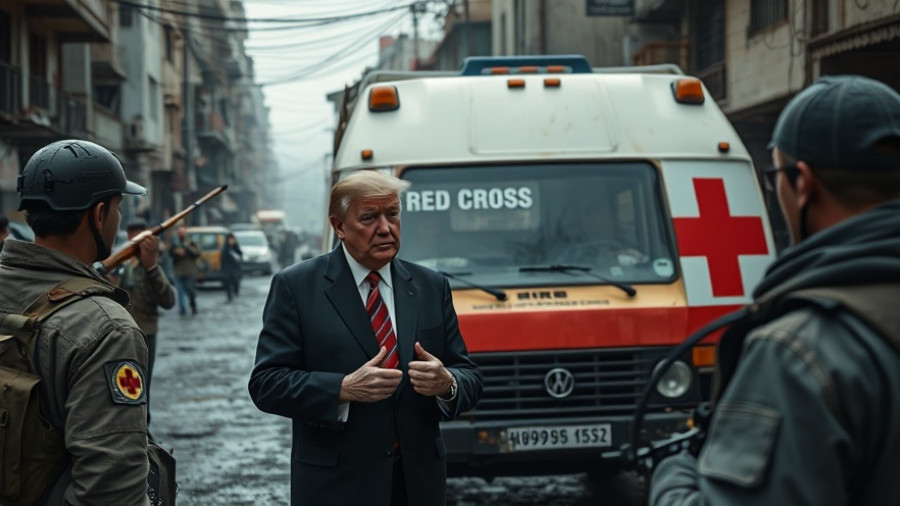
Israel's Response: Seizing Gaza Amidst Hostage Negotiations
The recent violations of a hostage deal by Hamas has prompted Israel to consider significant expansions of its military control over the Gaza Strip. Prime Minister Benjamin Netanyahu has indicated that a response is in the works after Hamas returned remains of an Israeli soldier, Ofir Tzarfati. Striking multiple tensions at once, this situation invites close scrutiny from those monitoring the ongoing humanitarian and political implications.
The Unfolding Scenario: Military Strategy and Humanitarian Concerns
According to sources, Israeli intelligence has uncovered that Hamas possesses access to several deceased hostages, raising alarms about their activities amid military engagements. The discussions surrounding Israel's plans involve consultations not only with internal military leaders but also with the Trump administration. Currently, Israel is strategizing on how to assert control over areas of Gaza, making statements about 'biting into Hamas territory' clear attempts to deter continued hostilities.
The Broader Picture: Interfaith Dynamics and Global Implications
For Christians and interfaith advocates, the events unfolding in Gaza represent more than just geopolitical shifts. They contradict the core values of humanitarianism and justice that many support. This complexity affects not only the immediate region but echoes globally, with various faith communities feeling a call to engage in dialogue, advocacy, and support for those affected by the ongoing violence. The notion of fighting for justice often speaks to the conscience of culturally engaged believers.
Future Trends: What Lies Ahead for Peace in the Region?
Looking forward, the implications of further Israeli military actions could impact both immediate residents of Gaza and the broader political equation in the Middle East. Observers may ponder: How might this escalation influence peace negotiations? Advocates for peace and justice may remain hopeful for diplomatic resolutions, yet the reality on the ground could provoke further conflict. For global Christians passionate about humanitarian issues, understanding the unfolding dynamics may lead to effective advocacy and informed prayers.
How Should Advocates Respond?
In light of these developments, individuals and church leaders concerned about the plight of Israelis and Palestinians alike must consider actionable ways to engage. Will they voice their support for peace? Will they seek to educate their communities on the complexities at play? Significantly, raising awareness around the issues facing the oppressed, whether through prayer, advocacy, or engagement with local leaders, can foster positive change in this entrenched conflict. Collaborative efforts—across faith lines—have the potential to change narratives and pave the way toward understanding and ultimately peace.
The unfolding situation is dire, reflecting broader conflicts that can affect everyone involved. Engaging in prayer, advocacy, and education may be essential in addressing the humanitarian concerns arising from these actions. Together, a compassionate response can help humanize the narratives being told and guide international sympathy towards those who suffer amid geopolitical maneuvers.


Write A Comment