Add Row
Add Element
cropper
update

Biblical Living Unlocked

Logo - Biblical living unlocked
update
Add Element
  • Home
  • Categories
    • Biblical Parenting
    • Parenting Tips
    • Family Fellowship
    • Bible Teaching
    • Apologetics
    • Community Stories
    • Youth Focus
    • International
    • Walton Evangelical Church
    • Salt Church Mar Menor
    • Salt Church Los Montesinos
    • John Piper
    • News & Offers
Add Element
  • Ken on Facebook
    update
  • update
  • update
  • update
  • update
  • update
  • update
March 08.2025
3 Minutes Read

Elizabeth Pipko: How Trump Inspired My Transformation and Supports Israel

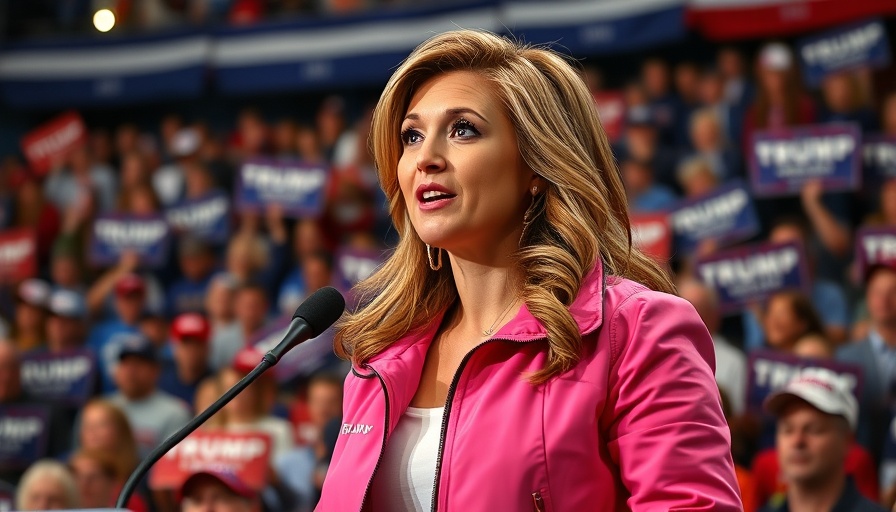
Trump's young confidante speaks at rally in support of Trump.

Elizabeth Pipko: How Trump Inspired My Transformation and Supports Israel

In the intricate tapestry of American politics, few narratives are as captivating as that of Elizabeth Pipko, a young confidante of Donald Trump. The granddaughter of Soviet Jewish immigrants, she reflects on how Trump not only revitalized her career but also represented a profound shift in her beliefs, particularly concerning Israel. In her own words, "Donald Trump saved my life," signifying a transformation that goes beyond mere political affiliation.

A Journey from Crisis to Confidence

Pipko's journey is marked by resilience, especially after facing personal and professional setbacks. Previously a rising star in the world of figure skating, a devastating leg injury left her grappling with depression and uncertainty about her future. However, a serendipitous encounter with a photographer led to a modeling career that blossomed, restoring her confidence. It was during this pivotal moment that she first encountered Trump's political narrative, which resonated deeply with her as she searched for purpose.

The Evolving Landscape of Support for Israel

As the spokesperson for the Republican Party, Pipko has emerged as a vital voice in the discourse surrounding Israel. She staunchly supports Trump's pro-Israel policies, asserting that he champions the rights and well-being of the Jewish state in a way that transcends traditional political lines. Her advocacy is rooted in her cultural identity, acknowledging the complexities faced by both Israel and those who seek to support it amidst a polarized political environment.

Faith and Leadership: The Personal Connection

During her interview, Pipko articulate that her connection to Trump is not merely political; it is also spiritual. She notes, "I think God saved him," in reference to Trump's survival of an assassination attempt, adding layers to her personal narrative of faith. This belief coincides with her advocacy for both Israel and Christian values, underlining an intersection of faith and politics that resonates with many in her audience.

Counterarguments: Navigating the Controversies

Pipko's support for Trump does not come without its challenges. She acknowledges that Trump's relationships with women and his controversial statements are often weaponized against him in the media. Despite this, she argues that those who engage with him on a personal level often find a vastly different reality than what is depicted in public narratives. This discrepancy raises questions about the nature of public perception versus personal experience, particularly in politics.

Looking to the Future: A New Generation of Leadership

As a millennial woman deeply embedded in political activism, Pipko represents a shift in how younger generations engage with established political norms. She expresses an eagerness for her generation to step into leadership roles, potentially as the first female president. Her vision extends beyond mere aspiration; it encapsulates the desire to bridge divides between diverse communities, particularly between Jewish and Christian demographics, in America.

Pipko's journey is not just a personal narrative; it serves as a reflection on the current political climate and the transformative power of leadership. In the realm of global politics, where discussions around Israel often resonate deeply with Christian communities, understanding these dynamics becomes crucial. As we continue to explore these themes, Pipko's insights illuminate the complex interplay between faith, identity, and political advocacy.

For those invested in the future of both Israel and the Jewish community in America, Pipko's story is a call to action—to engage, to question, and to advocate. Her journey underscores an important message: resilience and belief in leadership can inspire change, and support for Israel is a shared responsibility across faiths.

Now more than ever, it's essential to foster dialogue among various communities to advocate decisions that shape not just policies but also shared futures. As Pipko suggests, under Trump's leadership, "anything is possible," urging individuals to believe in the possibility of change and the promotion of peace.

International

14 Views

0 Comments

Write A Comment

*
*
Related Posts All Posts
12.04.2025

Is Netanyahu at Risk by Appointing Roman Gofman as Mossad Chief?

Update Is Netanyahu's Leadership Jeopardizing Israel’s Security? In a controversial move, Israeli Prime Minister Benjamin Netanyahu has appointed Roman Gofman as the new director of the Mossad, despite Gofman's lack of experience in intelligence and special operations. Previously, Gofman served solely as Netanyahu's military secretary, raising concerns about whether this choice prioritizes personal relationships over professional credentials. With Israel’s security at stake, critics warn that such political maneuvers could have dire consequences. The Importance of Experience in Intelligence Operations The Mossad is renowned for its covert operations and intelligence gathering—skills sharpened through rigorous training and experience. By appointing someone without a robust background in this field, Netanyahu may be sending a troubling message about the value of qualifications in leadership roles related to national security. This decision oversteps the obvious expertise of three internal candidates who played key roles in the organization's recent successes. Understanding the Stakes: The Broader Implications for Israel The stakes could not be higher. As Iran continues to develop its nuclear capabilities and tensions in the Gaza region escalate, Israel requires a leadership team in intelligence that can navigate these complexities with skill and experience. Politics and defense should not mix, especially when the lives of citizens are at risk. A Closer Look at Gofman's Background Roman Gofman’s experience is largely military—with no clear ties to intelligence, which raises questions about his ability to lead this crucial organization. Understanding Israel's geopolitical landscape requires more than military acumen; it demands deep insight into international diplomacy, cultural nuances, and intelligence gathering strategies. Contextualizing Leadership Decisions in High-Stakes Environments Israel's security landscape is fraught with challenges from regional adversaries, making effective intelligence crucial. Gofman's appointment is seen by many as a gamble—one that places not only Netanyahu's trust in personal loyalty at the forefront but could also diminish the operational effectiveness of the Mossad. This development reflects a growing concern about how political favoritism may overshadow merit in sensitive government appointments. Future Directions: What Lies Ahead? As Israel faces increasingly complex security challenges, the effectiveness of the Mossad under Gofman’s leadership will be closely monitored. Observers and critics alike will watch for changes in operational efficiency and the organization’s ability to respond to emerging threats. The ramifications of this appointment are yet to unfold, but they carry the potential for significant implications for Israeli security strategies moving forward. Call for Accountability and Transparency At this critical juncture, it is imperative for those concerned with Israel's future to advocate for accountability in leadership roles. Engaged citizens—including Christian communities that follow developments in Israel closely—must pursue transparency in government, particularly regarding decisions that could impact national stability. As observers, they have a role in ensuring political decisions do not compromise Israel’s security. In conclusion, while Netanyahu's loyalty to allies is understandable, prioritizing personal relationships over professional acumen in national security could endanger the very principles of safety and stability upon which Israel stands. Those who care about justice and peace in the region must remain vigilant and hold leaders accountable for their choices.

12.04.2025

Nicaragua's Christmas of Persecution: How Family Traditions Change Under Duress

Update Longing for Home: The Christmas Experience of Alaia and Manuela The Christmas season is a time of joy, celebration, and family gatherings for many around the world. For 13-year-old Alaia and her nine-year-old sister Manuela from Nicaragua, it represents cherished traditions rooted in their Christian faith. In their home, every December was filled with the laughter and love of family members, not only celebrating the birth of Jesus but also participating in outreach initiatives to share hope with their community. As Alaia reflects, "It matters that you remember His birth," encapsulating the spiritual essence of their festivities. A Sudden Turn: The Reality of Persecution However, this Christmas joy was abruptly threatened when their father, a devoted pastor, became a target of Nicaragua's oppressive regime. The family's life descended into chaos when he was arrested—his only crime was preaching the Gospel. As they faced an uncertain future, Alaia and Manuela had to flee their home, forced to leave behind everything they knew, along with their beloved Christmas traditions. In stark contrast to their previous experiences, the girls found themselves in a world fraught with fear and anxiety. Their mother’s daily visits to the prison yielded no answers, emphasizing the grim reality of persecution in their country, where religious leaders are often jailed or made to disappear for opposing the government's authority. As Manuela recalls, “We didn’t know if he was alive or dead.” They clung to their faith, praying for their father’s safety while navigating the emotional turmoil of displacement. Faith Amidst Struggles: The Resilience of Their Spirits The darkness of displacement transformed into a period where Alaia and Manuela had to hold on tightly to their faith. Their mother educated them about the realities of religious persecution, emphasizing the importance of steadfastness in their belief. "No matter what, we must never deny Him," Alaia reflects, revealing a maturity beyond her years. This resilience is emblematic of the faith journey for many Christians facing similar tribulations in Nicaragua. Lessons from Nicaragua's Persecuted Church The experiences of Alaia and Manuela resonate powerfully with believers worldwide, particularly during the Christmas season. According to the Empty Tomb Project, recent years have seen a surge in the persecution of Catholic Christians in Nicaragua, where many priests have been detained and exiled due to oppressive laws enforced by President Daniel Ortega. These events serve as a poignant reminder for believers to examine their own lives and reflect on the hospitality—or lack thereof—extended towards Christ and His followers. As the Auxiliary Bishop of Managua, Silvio Baez, notes, “The hand of Jesus… is stronger than the slander and persecution that are unleashed.” Such words encourage Christians, whether in Nicaragua or elsewhere, to remain steadfast in their faith, realizing they are not alone amidst hardship. This Christmas, as communities gather to celebrate, there is a collective call for solidarity with those who suffer persecution for their faith. Turning Sorrow into Hope: The Broader Christian Community's Response As we reflect on the challenges faced by families like Alaia and Manuela’s, there’s an opportunity for Christians to respond with compassion and advocacy. Engaging with stories of persecution fosters a deeper understanding of the faith's global context and inspires action—from prayer initiatives to fundraising for those displaced by religious oppression. Each small act contributes to a collective effort to support persecuted Christians and advocate for their rights, embodying the very essence of Jesus’s teaching: loving thy neighbor. Courage and Hope: Embracing the Christmas Spirit This Christmas, as families like the one of Alaia and Manuela navigate the shadow of persecution, let us not forget the deeper meaning of the season. It’s not just about decorations or festivities; it’s a time to reflect on the light of Christ amidst darkness. By embracing the spirit of Christmas—generosity, love, and hope—we can stand in solidarity with our brothers and sisters in faith, ensuring that they are not forgotten. As you consider their story and the plight of many in Nicaragua, join us in praying for peace and freedom for all persecuted Christians. May the light of Christ empower us to act courageously and transform our sorrow into unwavering hope this holiday season.

12.03.2025

Recent Transfer of Deceased Hostage Remains: Seeking Justice and Reconciliation

Update Recent Developments in the Hostage Recovery Efforts On December 3, 2025, a significant step was taken in the ongoing situation regarding hostages taken by Hamas as the family of a deceased victim received the remains of their loved one. Following the announcement by the Palestinian Islamic Jihad that they had located additional deceased hostages, a coffin was officially transferred to Israeli Defense Forces (IDF) personnel. This ceremony marks a vital, albeit grim, milestone in a saga that has deeply affected many in Israel and beyond. The Ongoing Search for Closure The transfer of remains comes amid the continued search for answers related to two hostages, IDF Master Sergeant Ran Gvili and Thai national Sudthisak Rinthalak, whose bodies have been held in Gaza since the 2023 attacks. The grieving families of these victims have been advocating tirelessly, uniting in their shared torment. In past months, there were emotional gatherings in Tel Aviv as families and supporters came together to demand the recovery of all hostages, living or deceased. One poignant rally saw participants holding pictures of those they lost, calling for justice and closure for their families. Implications of International Mediation Efforts by international mediators continue to play a crucial role in facilitating the return of these remains. Qatar, acting as a mediator, has pushed for ongoing negotiations aimed at securing favorable terms for all parties involved. This increase in diplomatic activity reflects the urgency surrounding the return of remains, as well as the broader aim of achieving lasting peace in the region. The Emotional Impact on Families For many families, learning about the transfer of remains stirs a complex mixture of hope and heartache. Talik Gvili, the mother of Ran, poignantly expressed her fears about whether her son would be left behind, reflecting the emotional weight borne by families of hostages. Conversations with these families reveal a profound sense of community formed amid shared trauma. A family member stated, "Every time someone returned, there was a feeling part of us came back," highlighting the deep connections formed during this harrowing time. Broader Context: Humanitarian Concerns As humanitarian needs in Gaza remain critical, organizations like the Red Cross are at the forefront of efforts to address both the immediate needs of the population and the more profound issues surrounding hostages. The civil-military coordination efforts by the U.S.-led Civil-Military Coordination Center (CMCC) are significant in ensuring humanitarian aid reaches those affected by conflict. With over 24,000 aid trucks entering Gaza, the humanitarian outlook remains a pressing issue amid ongoing hostilities. Potential for Future Developments Looking forward, the situation regarding the remaining deceased hostages and the return of living hostages remains uncertain. The complexity of negotiations underscores the pressing need for a peaceful resolution that addresses the grievances of all affected parties. As Israel continues to receive remains, renewed discussions about hostages could provide paths toward more comprehensive peace talks. This situation serves as a stark reminder of the human cost of prolonged conflict and the urgent need for compassion and understanding among nations. For many, these recent developments prompt introspection about their role in advocating for human rights and justice, compelling everyone to engage more deeply in discussions about peace. Your Voice Matters: Now is the time to reflect on these significant events, understanding their broader implications for peace and stability. Consider how you can engage with local or global movements advocating for peace in the Middle East.

Terms of Service

Privacy Policy

Core Modal Title

Sorry, no results found

You Might Find These Articles Interesting

T
Please Check Your Email
We Will Be Following Up Shortly
*
*
*